 EN
EN

Strategic Material Selection for Steel Structure Building Cost Efficiency
Optimizing steel grade choice: balancing yield strength, procurement cost, and fabrication speed
Picking the correct steel grade involves looking at how well it performs structurally, what it costs, and how easy it is to fabricate all together. Steels with higher yield strength such as ASTM A572 can actually make structural members smaller, which sounds great until we factor in the price tag. These materials typically cost around 15 to 30 percent more than regular carbon steel (ASTM A36), and they also take longer to work with because welders need extra preparation steps and sometimes even preheating before starting. The situation gets really tricky in areas prone to earthquakes where buildings need to bend without breaking. That's when those tradeoffs become much more important. Our team has found that doing a full lifecycle analysis upfront makes all the difference. We compare how much money we save on materials versus the extra time spent in fabrication shops, plus the need for specialized workers who know exactly what they're doing. From our field experience, Grade 50 ASTM A572 tends to be the sweet spot for mid rise commercial structures while ASTM A36 still holds its ground as the better choice economically for most warehouse projects.
Reducing material waste via nesting optimization and Cutting Stock Problem (CSP) applications
Modern nesting software uses Cutting Stock Problem or CSP algorithms to get the most out of metal plates when cutting them up. This approach has been shown to slash waste from around 20 to 25 percent industry wide down to just 8 to 12 percent. These programs work by accounting for shapes, the width lost during cutting, and figuring out the best order to make cuts. They typically manage to utilize about 92 to 95 percent of materials. The benefits go beyond saving money on steel at about $18 to $25 per ton saved. There are also cost savings from less waste disposal, fewer workers needed for handling materials, and real drops in the energy embedded in production processes. Research published in the Journal of Construction Engineering and Management backs this up showing that CSP based nesting beats traditional manual methods hands down for any project involving over 500 tons of structural steel.
Integrating sustainability and cost: recycled content, embodied carbon, and structural efficiency trade-offs
When choosing materials for sustainability, we need to balance green objectives against structural needs and what fits within financial constraints. Steel made from recycled content usually has around 25 to 40 percent post-consumer scrap mixed in, which cuts down on carbon emissions by roughly 30 to 50 percent compared to brand new steel according to reports from the EPA and World Steel Association. There's a catch though. The varying chemical composition of recycled steel sometimes makes welding tricky and affects how strong it is overall. Engineers might need to specify sections that are 10 to 15 percent bigger just to hit required strength levels. And let's not forget about costs either. Green certified steel typically comes with a price tag that's 5 to 12 percent higher than standard options. Looking at full lifecycle evaluations shows that mixing approaches works best. Use those high recycled content steels where they won't bear heavy loads like in bracing systems or secondary frames, but save the top quality alloys for critical connections and parts that need to resist earthquakes. This strategy gives us the best return on investment when considering both money spent and carbon saved, all while keeping structures safe and durable over their entire lifespan.
Value-Driven Design Optimization in Steel Structure Building Projects
Early-stage design standardization to minimize fabrication variability and erection complexity
When companies standardize components right from the conceptual design phase, they tend to see much less fluctuation in costs and fewer problems with project timelines. The numbers back this up too industry studies show that when manufacturers stick to standard beam profiles, connection methods, and consistent bay measurements, fabrication mistakes drop around 25%, while on site work gets done faster. Take distribution centers for instance. When bays are all the same size say 30 feet by 40 feet throughout the facility fabricators can really streamline their CNC programming. Setup takes less time overall, and weld quality tends to be better because everyone follows the same procedures consistently. On the construction side things get smoother as well. With predictable sequences there's less need for fixing mistakes later on. Crane operators know exactly what to expect, which makes planning easier. Assembly crews report cutting their time on site by about 30% in some cases. And quality control becomes simpler too. Inspectors don't have to deal with weird custom shapes anymore just check the same details over and over. This means less time spent inspecting and naturally fewer defects slipping through.
Value engineering levers: modular framing, connection simplification, and lifecycle cost integration
Three high-impact value engineering strategies reshape steel structure economics:
- Modular framing systems—prefabricated volumetric units with integrated MEP sleeves and fireproofing—reduce on-site labor by 40% and cut weather-related delays by over 50%;
- Connection simplification, particularly replacing field-welded moment connections with standardized bolted shear tabs or double-angle connections, lowers fabrication hours by 15–20% and improves QA/QC traceability;
- Lifecycle cost integration, especially embedding corrosion protection, fire resistance, and maintenance access into early decisions, transforms cost analysis: a 10% upfront investment in duplex-coated fasteners or intumescent coatings routinely yields 200% ROI through extended service life and avoided remediation.
This approach shifts procurement focus from lowest bid to lowest 50-year operational cost—grounded in quantifiable metrics, not assumptions.
Fabrication, Logistics, and Supply Chain Management for Steel Structure Building Cost Control
Regional fabrication capacity, certification tiers, and quality-driven cost negotiation strategies
Location really does make a difference. When companies choose AISC certified fabricators within about 200 miles, they usually save between 15 to 25 percent on shipping expenses and cut down delivery time by roughly two to four weeks. This can be game changing for projects needing quick turnaround. The connection between AISC certification and reliable performance is pretty clear. Looking at the 2023 AISC Quality Benchmarking numbers, certified shops tend to have about 18% fewer problems requiring rework and resolve quality issues 30% faster than their non-certified counterparts. Smart businesses don't just focus on price per unit when negotiating contracts. They look at actual quality metrics too like keeping weld defects below 2%, maintaining over 98% accuracy in dimensions, and verifying those all important mill test reports for materials. Getting third party audits built into contracts for both blueprints and finished parts makes good sense before anything ships out. These kinds of quality controls help avoid those costly change orders everyone hates. According to RSMeans research, such changes end up increasing project budgets by anywhere from 7 to 12% when field fitting problems arise or codes aren't met properly.
Transportation logistics: managing weight-to-volume constraints and mitigating just-in-time delivery risks
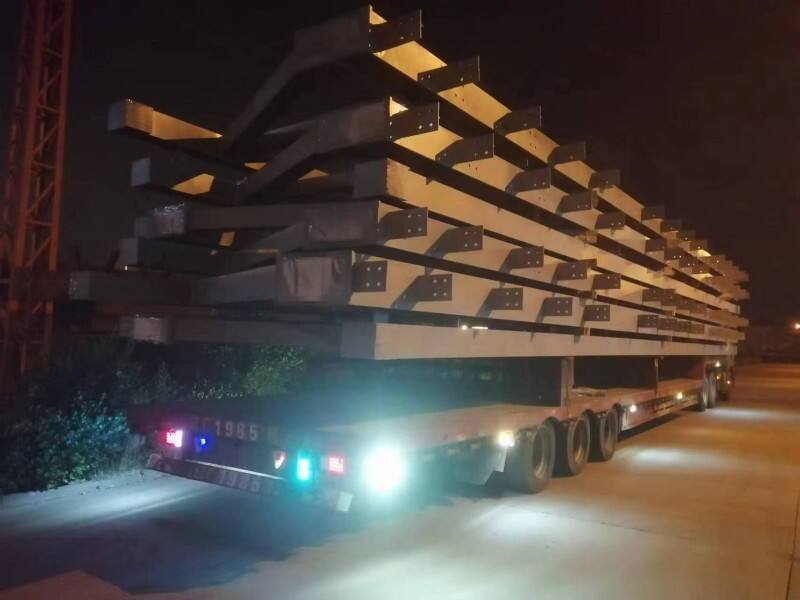
The heavy nature of steel compared to its size creates problems for transport efficiency. Most trailers only carry about 60 to 75 percent of what they legally can, which means plenty of empty space goes wasted. Using three dimensional loading software actually makes a difference though. These programs figure out better ways to stack materials, adjust how things sit inside, and even determine where best to place braces so that overall trailer usage jumps around 20%. That translates to real money saved on shipping costs per ton. Sure, Just-in-Time deliveries cut down on storage needs at construction sites, but this approach also means companies face bigger risks when ports get backed up, carriers are short staffed, or bad weather hits. To play it safe, many smart operations source important hardware from two different suppliers and keep some extra stock on hand for those fast moving parts like ASTM A325 bolts and shear studs. Getting real time GPS updates combined with weather prediction tools lets managers spot potential holdups before they happen, saving thousands each day in crane waiting charges. And don't forget to set clear rules for passing components from manufacturers to transporters. Make sure everyone documents the condition of pieces being moved and confirms everything is properly secured. Damage during transit remains one of the main reasons projects end up rejecting materials once they arrive on site.
FAQ
What is the best steel grade for mid-rise commercial structures?
The Grade 50 ASTM A572 is often considered the optimal choice for mid-rise commercial structures due to its cost and structural performance balance.
How does nesting optimization reduce material waste?
Nesting optimization using CSP algorithms improves material utilization, reducing waste from 20-25% to around 8-12%.
Why is recycled steel more expensive despite its eco-friendly benefits?
Steel made from recycled content can be more expensive due to variable chemical composition affecting welding and strength.
How can transportation logistics be optimized for steel structures?
Using three-dimensional loading software can increase trailer utilization by around 20%, reducing shipping costs.
What is the advantage of choosing AISC certified fabricators?
AISC certified fabricators tend to resolve quality issues faster and help save on shipping expenses and delivery time.