 EN
EN

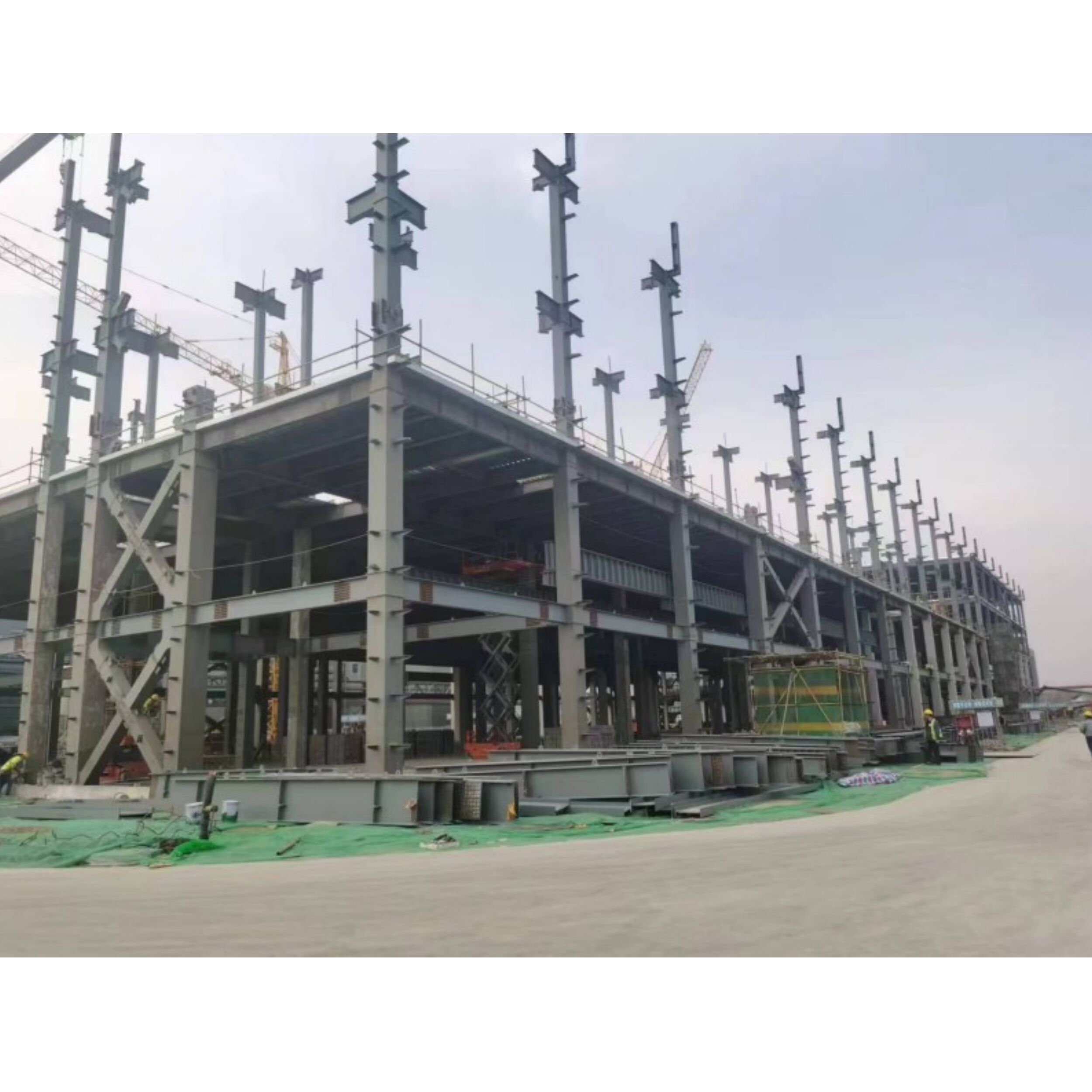
Speed of Construction and Faster Project Completion with Modular Steel Structures
How Off-Site Fabrication Accelerates the Modular Construction Process
Steel buildings constructed using modular methods can cut down project timelines by around half when compared to old school construction techniques. The magic happens because most parts get made in factories where conditions are stable, so there's no waiting around for bad weather or dealing with inconsistent materials. When these precision cut steel beams show up at the job site, they already have all the necessary electrical wiring and plumbing built right in. According to recent industry data from last year, this setup cuts down on costly mistakes and rework by roughly one third. Plus, since everything follows such a clear process, contractors can track progress day to day. This makes modular construction particularly attractive for companies needing to get structures up quickly without sacrificing quality.
Integrating Parallel Workflows: Simultaneous Site Preparation and Factory Production
When workers are busy laying down foundations and hooking up utilities at construction sites, manufacturers back at the factory are putting together wall panels, roof sections, and all sorts of mechanical components. This kind of simultaneous work cuts down project timelines quite a bit usually around four to six weeks for buildings of moderate size. Take a look at what happened in 2023 with one particular mixed-use complex they finished the steel framework part of their building nearly a month earlier than expected simply because they timed deliveries just right with when cranes would be available on site.
Case Study: Emergency Medical Facility Built in 6 Weeks Using Steel Structure Building Techniques
- Challenge: Construct a 15,000 sq.ft. emergency care center during a public health crisis
- Solution: Prefabricated steel modules with integrated HVAC and medical gas systems
- Result: Operational facility delivered in 42 daysâ67% faster than conventional methods
- Key Metric: 94% of mechanical systems passed inspection before leaving the factory
Growing Demand for Rapid Deployment in Commercial and Infrastructure Projects
Over 63% of commercial developers now prioritize modular steel structure building techniques for time-sensitive projects like data centers and retail expansions. The methodâs scalability addresses critical needs across sectors:
| Sector | Avg. Time Saved | Common Use Cases |
|---|---|---|
| Healthcare | 40â55 days | Laboratories, temporary wards |
| Education | 30â45 days | Classroom expansions |
| Industrial | 25â35 days | Warehouse mezzanines |
Recent innovations in hybrid concrete-steel foundations now enable permanent structures to adopt these accelerated methods, with 82% of contractors reporting improved profitability on phased developments.
Cost Efficiency and Long-Term Savings in Prefabricated Steel Structure Buildings
Reduced Labor and Scheduling Costs Through Controlled Factory Environments
Factory fabrication reduces on-site labor requirements by 35â50% compared to traditional construction (Construction Efficiency Report 2023). Controlled environments eliminate weather-related delays, while standardized processes ensure predictable schedulingâespecially valuable for logistics-dependent builds.
Bulk Material Procurement and Repeatable Designs for Cost-Effectiveness
Identical modular units allow bulk purchasing discounts of up to 28% on structural steel components. Repeatable engineering plans eliminate redesign costs; one automotive parts distributor saved $162k across 12 facilities using template-based designs.
Case Study: Retail Chain Achieves 22% Cost Savings on Expansion Using Modular Steel Buildings
A national retailer saved $4.1 million on a 15-location expansion through prefabricated steel strategies. Factory-built wall panels and roof trusses reduced on-site labor by 41%, while standardized foundations shortened permitting timelines by three weeks per location.
Improved ROI Across Multi-Phase Developments with Scalable Metal Buildings
Reusing steel building designs creates compounding savingsâa university housing project achieved 19% faster construction on Phase 2 by replicating structural modules. Energy modeling shows these buildings require 30% less HVAC capacity than conventional structures, delivering ongoing operational savings.
Minimal On-Site Disruption and Urban Construction Benefits of Off-Site Fabrication
Urban projects using steel structure building techniques reduce community impact through off-site manufacturing, achieving 73% less truck traffic and 41% lower noise levels than traditional methods (Urban Construction Institute 2023). This approach supports stakeholder relations and helps meet municipal sustainability goals.
Reducing Noise, Traffic, and Safety Risks in Dense Urban Areas
Prefabricated steel modules eliminate 85% of on-site cutting and welding, minimizing noise and airborne particulates. Projects in metro areas report:
| Metric | Traditional Construction | Modular Steel Building | Improvement |
|---|---|---|---|
| Daily truck deliveries | 22 | 8 | 64% reduction |
| Peak decibel levels | 98 dB | 67 dB | 31% reduction |
| Worker injury rate | 5.3/100 workers | 1.1/100 workers | 79% reduction |
These improvements reflect stronger compliance with urban noise ordinances and OSHA safety standards.
Maintaining Operational Continuity During Expansion: School Renovation Case Study
A midwestern school district completed a 25,000 sq ft classroom expansion using off-site steel fabrication while maintaining full campus operations. Key outcomes:
- 92% of students reported no disruption to daily routines
- Emergency access routes remained fully open
- Zero weather-related delays during winter installation
The project finished 18 weeks faster than conventional bids would have allowed.
The Role of Modular Construction in Future-Proofing Business Infrastructure
Steel structure buildings support adaptive growth through:
- Phased expansion â Add production or office modules as demand increases
- Technology readiness â Pre-wired units compatible with 5G and smart building systems
- Zoning adaptability â Reconfigure interior layouts without structural modifications
Major logistics firms use this model to maintain 24/7 operations during warehouse upgrades, with some reporting 34% higher throughput during transitional phases than with traditional rebuilds.
Sustainability, Durability, and Quality Control in Modular Steel Structure Buildings
Precision Manufacturing Reduces Waste and Supports Sustainable Building Practices
Computer-aided design (CAD) and robotic fabrication achieve tolerances within 1â2mm, eliminating over-engineering and reducing raw material waste by 18â23% (2024 industry report). Factory control ensures components meet exact specifications before shipment, minimizing field adjustments.
Case Study: 95% Reduction in Landfill Waste Compared to Traditional Construction
A modular hospital project in Scandinavia diverted 4,800 tons of debris from landfills by prefabricating 92% of its steel components off-site. Closed-loop recycling and cross-ventilated welding stations enabled near-total reuse of steel offcuts, cutting disposal costs by $740k (Ponemon 2023).
Balancing Embodied Carbon and Recyclability in Steel as a Primary Material
Steel production emits 1.85 tons of COâ per ton of material, but its recyclability offsets long-term impact. Modular designs allow 87% of structural steel to be disassembled and repurposed, far exceeding concreteâs 9% salvage rate (Global Steel Council 2023). Advanced coatings extend steel lifespan to 75+ years, reducing replacement frequency.
Factory-Based Quality Assurance Ensures Structural Integrity of Modular Units
Steel modules undergo 17-point inspections for weld integrity, corrosion resistance, and load-bearing capacity before shipment. Ultrasonic testing detects micro-fractures invisible to the eye, resulting in a 99.6% defect-free rate across 12,000 modules analyzed in 2024.
Case Study: Independent Testing Confirms 15% Higher Load Tolerance in Steel Structures
Third-party evaluations of a modular data center in Singapore showed steel-framed walls withstood 150km/h winds without deformationâexceeding local codes by 15%. Seismic-resistant steel joints performed 23% better than cast-in-place concrete during simulated earthquake trials.
Scalability and Flexibility of Expandable Metal Buildings for Business Growth
Modular steel structure buildings excel at supporting dynamic business needs, with 72% of companies using them reducing expansion timelines by 40% compared to traditional methods (2024 Industrial Construction Report), thanks to standardized, repeatable designs.
Modular Design Enables Seamless Integration for Rapid Construction of Steel Buildings
Prefabricated components arrive pre-engineered and ready for assembly, allowing facility expansions without halting operations. Roof panels, wall systems, and frames feature plug-and-play compatibility, enabling teams to add production bays, offices, or storage in weeks.
Case Study: Tech Startup Triples Office Space in 12 Months Using Plug-and-Play Modules
A Silicon Valley AI firm addressed space shortages during a hiring surge by adding 15,000 sq ft of collaborative workspaces and server rooms across three floors using modular steel units with removable partitions. The project finished 22% under budget, avoiding $1.2M in potential revenue losses from delayed product launches.
Planning Phased Expansion with Future-Ready Prefabricated Steel Structures
Forward-thinking organizations leverage steelâs structural predictability for long-term growth planning:
| Phase | Strategy | Cost Efficiency |
|---|---|---|
| Initial Build | Core shell with reinforced foundations | 15% savings via bulk material buys |
| Year 3 | North-side warehouse extension | 30% faster permitting |
| Year 7 | Mezzanine offices over production | Zero downtime during installation |
This strategy minimizes upfront capital outlay while ensuring facilities evolve alongside operational demandsâfrom manufacturing scalability to retail footprint adjustments.
FAQ
What are the main advantages of using modular steel structures?
Modular steel structures offer speed in construction, reduced labor costs, less onsite disruption, and sustainability benefits, including minimal waste and recyclability.
How does off-site fabrication contribute to faster project completion?
Off-site fabrication allows components to be made under controlled conditions, reducing time spent onsite and avoiding weather-related delays, thus significantly speeding up the construction process.
Is modular construction suitable for urban environments?
Yes, modular construction reduces noise, traffic, and safety risks, making it ideal for dense urban areas by minimizing onsite activities and disruptions to the community.
How does modular construction impact long-term savings?
Modular construction leads to long-term savings through reduced labor costs, bulk material procurement, lower energy requirements, and a shorter timeline for ROI realization.
What sectors benefit most from modular steel structures?
Healthcare, education, and industrial sectors frequently benefit from modular steel structures due to their efficiency and speed, which are crucial for time-sensitive projects.
Table of Contents
-
Speed of Construction and Faster Project Completion with Modular Steel Structures
- How Off-Site Fabrication Accelerates the Modular Construction Process
- Integrating Parallel Workflows: Simultaneous Site Preparation and Factory Production
- Case Study: Emergency Medical Facility Built in 6 Weeks Using Steel Structure Building Techniques
- Growing Demand for Rapid Deployment in Commercial and Infrastructure Projects
-
Cost Efficiency and Long-Term Savings in Prefabricated Steel Structure Buildings
- Reduced Labor and Scheduling Costs Through Controlled Factory Environments
- Bulk Material Procurement and Repeatable Designs for Cost-Effectiveness
- Case Study: Retail Chain Achieves 22% Cost Savings on Expansion Using Modular Steel Buildings
- Improved ROI Across Multi-Phase Developments with Scalable Metal Buildings
- Minimal On-Site Disruption and Urban Construction Benefits of Off-Site Fabrication
- Reducing Noise, Traffic, and Safety Risks in Dense Urban Areas
- Maintaining Operational Continuity During Expansion: School Renovation Case Study
- The Role of Modular Construction in Future-Proofing Business Infrastructure
-
Sustainability, Durability, and Quality Control in Modular Steel Structure Buildings
- Precision Manufacturing Reduces Waste and Supports Sustainable Building Practices
- Case Study: 95% Reduction in Landfill Waste Compared to Traditional Construction
- Balancing Embodied Carbon and Recyclability in Steel as a Primary Material
- Factory-Based Quality Assurance Ensures Structural Integrity of Modular Units
- Case Study: Independent Testing Confirms 15% Higher Load Tolerance in Steel Structures
- Scalability and Flexibility of Expandable Metal Buildings for Business Growth
-
FAQ
- What are the main advantages of using modular steel structures?
- How does off-site fabrication contribute to faster project completion?
- Is modular construction suitable for urban environments?
- How does modular construction impact long-term savings?
- What sectors benefit most from modular steel structures?