 EN
EN

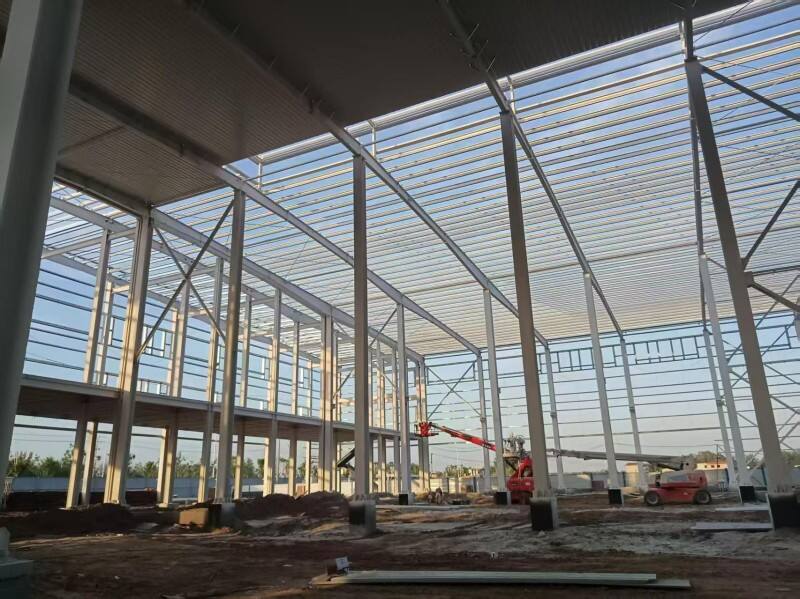
Wind Resilience: Engineering Steel Structure Buildings for Tropical and Coastal Storms
Aerodynamic Form Optimization and Bracing for Hurricane-Prone Regions
Steel buildings stand up well against strong winds thanks to their aerodynamic shapes and smart bracing systems. When engineers design these structures, they pay close attention to roof slopes and wall angles that help push wind upwards rather than letting it lift the building off its base. This approach can cut uplift pressure by around 40% when compared to square box designs that just sit there and take whatever comes. The steel itself works wonders too since it packs so much strength for its weight. Most steel structures can handle winds blowing over 150 miles per hour without falling apart. Special diagonal supports transfer sideways forces right down to the foundation, while certain frame designs let the building bend slightly instead of breaking suddenly like some other materials might. Even during powerful Category 4 hurricanes where winds range from 130 to 156 mph, specially built frames with bolted joints keep everything connected properly, and many modern buildings have been tested to survive gusts near 180 mph.
Anchorage, Diaphragm Design, and Real-World Performance – Lessons from Post-Irma Florida
The strength of good anchoring and proper diaphragm design has been proven time and again during severe storms and hurricanes. When buildings have continuous load paths running all the way from their roof diaphragms down through shear walls and into those anchor bolts stuck in reinforced concrete foundations, they stay attached when things get rough. After Hurricane Irma hit, engineers looked at steel buildings where hold-down bolts met the requirements set out in ASCE 7-22 standards. What they found was pretty remarkable: these buildings had about 90 percent fewer problems with their foundations compared to older structures that used conventional anchoring methods. The diaphragm action concept works because those roof and wall panels actually become one big system that spreads loads around instead of concentrating them in specific spots. This turned out to be absolutely critical for buildings facing constant wind speeds above 120 mph plus sudden changes in air pressure. Looking back at what happened after Irma shows us clearly why integrated systems for resisting lateral forces work so much better than trying to patch together different components.
Cold Climate Adaptation: Snow Load Management and Low-Temperature Integrity of Steel Structure Buildings
Dynamic Snow Load Calculations and Drift-Aware Structural Framing
When it comes to areas that get lots of snow, just doing basic load calculations doesn't cut it anymore. The latest ASCE 7-22 guidelines demand we account for how wind moves snow around and the temperature changes that affect snow distribution. Snow drifts can create pressure spots that are three times what normal calculations would predict. Many engineers now rely on computational fluid dynamics simulations to spot these problem areas. These models help find trouble spots like those awkward pockets behind parapet walls or at points where different roof sections meet. Based on what these simulations show, structural adjustments become necessary. For example, beams need to be deeper or wider in risky locations. On steeper roofs (anything over a 4:12 pitch), purlins should be spaced no more than five feet apart. Extra bracing is also needed wherever snow tends to pile up heavily. These adjustments make all the difference when dealing with mountains that receive over 250 inches of snow each year.
Expansion Joints and ASTM A572 Grade 50 Toughness in Subzero Alpine Environments
At -40°F, thermal contraction demands expansion joints every 200–300 feet to prevent stress fractures. Paired with this, ASTM A572 Grade 50 steel delivers superior low-temperature performance:
| Property | Standard Carbon Steel | ASTM A572 Grade 50 |
|---|---|---|
| Minimum Yield Strength | 36 ksi | 50 ksi |
| Fracture Resistance | Brittle below -20°F | Maintains toughness to -34°F |
| Impact Resistance | Low Charpy V-notch | 20 ft-lb at -30°F |
Certified by the American Society for Testing and Materials (ASTM), this grade resists freeze-thaw cycling and seismic shifts in alpine installations–reducing failure risk by 63% versus conventional carbon steel.
Corrosion Defense: Protecting Steel Structure Buildings in Humid, Saline, and Flood-Prone Zones
Hot-Dip Galvanizing (ASTM A123) vs. Zinc-Aluminum Alloy Coatings Under Salt Spray
When dealing with structures near the coast, protecting against corrosion isn't just about how things look on the surface. Hot dip galvanizing according to ASTM A123 standard creates a zinc coating that actually sacrifices itself to protect underlying steel, working even when there are cuts or scratches in the metal. Testing shows these coatings can hold off white rust formation for around 100 to 150 hours under accelerated salt spray conditions. For even better protection, zinc aluminum alloys containing about 55% aluminum offer another layer of defense thanks to the way aluminum forms its own protective oxide film. These combinations typically last between 250 and 400 hours before showing signs of wear. The combined protection from both types of coatings means maintenance needs drop by roughly 40% in areas where salt content is high. That makes them particularly good choices for parts of buildings that get constant exposure, such as roof supports and framework components.
Stainless Steel 316 vs. Weathering Steel (Corten): Long-Term Durability in High-Humidity Flood Zones
When picking materials for areas prone to flooding and constant humidity, engineers have to walk a fine line between how long something will last and what it costs upfront. Stainless Steel 316, which contains extra molybdenum, stands up well against corrosion from chlorides and keeps its strength even after sitting underwater for many years. Corten steel works differently. It forms a kind of protective rust layer when exposed to regular cycles of wet and dry weather, but if left permanently submerged, it starts breaking down because there's not enough oxygen reaching all parts of the metal. Looking at actual measurements taken in tropical delta regions reveals quite a gap between these options: Corten tends to lose around 0.25 mm per year while stainless steel only loses about 0.02 mm. That's why most designers go with stainless steel for things like foundation supports and other critical joints that need to stay strong underwater. Corten still has its place though, especially on exterior walls and decorative elements where weight isn't as much of a concern, offering good protection at a lower price point for those parts of buildings that aren't constantly getting soaked.
Thermal & Fire Resilience: Steel Structure Buildings in Arid and Urban Heat Island Contexts
Steel buildings stand out when it comes to staying cool and resisting fires, especially in hot desert areas and those urban heat pockets where temps often hit over 120 degrees Fahrenheit. The metal itself has this really high melting point around 2500 degrees, so it doesn't warp much even when temperatures swing wildly. When fires break out, special coatings on the steel actually puff up and create these protective layers that act like insulation. Plus, there are these fire rated insulation systems that slow down how fast heat moves through the structure, keeping things stable for at least an hour or two according to building codes. Cities dealing with heat island effects have found that applying reflective roof coatings cuts down on solar heat absorption by roughly 70 percent, which means less need for air conditioning inside. Pair that with good airflow design, and steel structures not only pass the ASTM E119 fire tests but also keep buildings efficient over time. Most contractors will tell you steel beats out conventional materials when looking at both safety factors and energy savings in the long run.
FAQ
Why is steel preferred for buildings in hurricane-prone regions?
Steel is preferred because of its aerodynamic shapes, strong bracing systems, and the ability to handle wind speeds over 150 mph, providing structural integrity during hurricanes.
How do steel structures adapt to cold climates?
Steel structures adapt through dynamic snow load calculations, drift-aware framing, and the use of materials like ASTM A572 Grade 50 steel for temperature and pressure resilience.
What measures are used to prevent corrosion in coastal areas?
Hot-dip galvanizing and zinc-aluminum alloy coatings are used to protect steel structures from corrosion, with stainless steel offering durability in flood zones.
How does steel contribute to fire resilience?
Steel's high melting point and the use of puff-up coatings provide insulating protection, allowing structures to meet fire safety standards and reduce heat absorption.
Table of Contents
- Wind Resilience: Engineering Steel Structure Buildings for Tropical and Coastal Storms
- Cold Climate Adaptation: Snow Load Management and Low-Temperature Integrity of Steel Structure Buildings
- Corrosion Defense: Protecting Steel Structure Buildings in Humid, Saline, and Flood-Prone Zones
- Thermal & Fire Resilience: Steel Structure Buildings in Arid and Urban Heat Island Contexts
- FAQ