 EN
EN

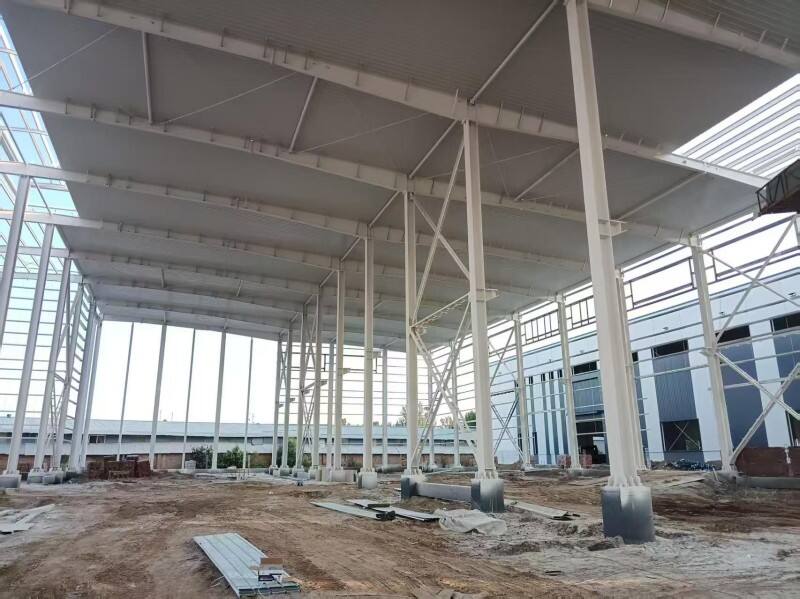
Inherent Structural Security of Steel Structure Buildings
Fire Resistance and Load-Bearing Integrity Under Extreme Stress
Steel holds up pretty well even when temps go over 1,000 degrees Fahrenheit because it doesn't melt until around 2,750°F and expands very little as it heats up. This means steel frames deform much slower than other materials during fires. Take wood frame buildings for instance they typically lose about 90% of their strength within just 20 minutes according to FEMA data from last year. But steel structures that are properly protected can keep holding weight for around two hours in standard fire tests like ASTM E119. Another thing working for steel is its ability to bend without breaking suddenly. When earthquakes hit, this property lets buildings absorb shock waves better and prevents sudden collapse. Plus, those factory made connections between steel beams distribute loads predictably across the structure. That makes steel stand out compared to older materials that tend to fail completely under similar stress conditions.
Pest-Proof, Non-Combustible Composition Eliminating Hidden Vulnerabilities
The fact that steel doesn't contain any organic matter means it won't attract termites, resist rodent damage, or suffer from mold growth. Wood buildings lose about 5% of their value every year because of these problems according to the National Pest Management Association report from last year. Steel just sits there without catching fire either. Unlike wood or some composite materials, it doesn't burn or feed flames when there's a fire hazard. The absence of these issues stops slow, unseen damage that weakens buildings over time. And let's not forget the money aspect. Maintenance bills for steel structures tend to be around 40% lower than what wood owners typically pay throughout the life of their buildings.
Hardening Entry Points in Steel Structure Buildings
Reinforced Doors, Blast-Resistant Windows, and Integrated Security Grilles
The main entry areas need protection that matches how strong the building itself is. For doors, we're talking about solid core steel or those hybrid laminates that go beyond 14 gauge thickness. These are usually combined with locking systems that meet the top tier ANSI/BHMA Grade 1 standards. When it comes to windows that can handle blasts, they have these special polycarbonate layers inside steel frames rated at UL 752 Level 3. According to Department of Defense tests, these windows stand up to over 400 pounds per square inch of pressure from explosions. Security grilles made from 12mm hardened steel rods serve as obvious second lines of defense. Facilities that install them report around an 83% drop in attempted breaches, according to a study by the Security Industry Association back in 2023.
Junction-Specific Reinforcements Against Thermal and Mechanical Breach Attempts
Vulnerable junctions—between walls and floors, around utilities, or at door/window perimeters—demand targeted reinforcement strategies:
| Reinforcement Type | Standard | Protection Scope | Key Benefit |
|---|---|---|---|
| Thermal Break Barriers | ASTM E119/E814 Class A | 2000°F for 120+ minutes | Prevents structural weakening |
| Continuous Welded Seams | AWS D1.1 Structural | Perimeter joints & utility penetrations | Eliminates prying weak points |
| Anti-Spreader Plates | MIL-DTL-15016E | Door/window perimeters | Defeats hydraulic tools |
| Vibration-Damping Mounts | ISO 10846-1 | HVAC/utility access points | Neutralizes sonic cutting tools |
These measures leverage steel’s ductility to absorb kinetic energy without fracturing—preserving both fire-resistance ratings and forced-entry resistance. Facilities implementing junction-specific hardening report 67% faster threat neutralization (Security Management Journal, 2024) and maintain structural stability during intrusion attempts that typically compromise conventional buildings within 8 minutes.
Optimizing Electronic Security Integration for Steel Structure Buildings
Overcoming Faraday Effects: Signal-Reliable Alarms, Access Control, and IoT Monitoring
Steel buildings tend to act like partial Faraday cages because of their density, which can mess with wireless signals from alarms, biometric systems, and those little IoT sensors we stick everywhere these days. But don't worry - there are ways around this problem if we think about it during the planning stages. Builders can incorporate conductive mesh into walls, apply special coatings on windows that let radio waves pass through, and place signal boosters at key spots throughout the structure. These fixes work best when added early on in the project. They make sure everything stays connected so security systems can detect intrusions quickly, log who comes and goes in real time, and keep tabs on what's happening inside the building automatically. What was once seen as a drawback actually becomes something pretty useful in the end. Steel's natural shielding qualities turn out to be a bonus for creating secure environments where digital systems aren't easily tampered with or disrupted.
Perimeter Resilience and Site-Level Security Synergy with Steel Structure Buildings
Steel buildings work really well with perimeter security setups, creating a kind of integrated defense network. Steel foundations and frames attach directly to things like bollards, crash rated fences, and those anti ram walls. This gets rid of those weak spots we often see in older masonry or concrete buildings. When vehicles try to break through, the force spreads throughout the whole structure instead of just hitting one spot. Another big plus for steel is how it doesn't interfere with electronic equipment. Buried seismic sensors, ground penetrating radar, and motion detectors all work better because there's no signal loss. What this means on the ground is three layers of protection working together. First, the physical barriers slow down attackers. Then the electronic systems pick up what's happening and confirm threats. Finally, command centers can respond effectively. All of this works better when built into a reliable steel framework from day one.
FAQ
Why are steel structures considered fire-resistant?
Steel structures are considered fire-resistant because steel melts at a much higher temperature than other building materials, such as wood. Steel also expands very little as it heats up, allowing it to maintain its structural integrity for longer periods during a fire.
How do steel structures prevent pest damage?
Steel structures prevent pest damage because they do not contain organic material that attracts pests. This makes them resistant to termites, rodents, and mold growth.
What reinforcements are important for steel building security?
Important reinforcements for steel building security include reinforced doors, blast-resistant windows, integrated security grilles, and junction-specific hardening strategies.
Can steel structures interfere with electronic security systems?
Steel structures can potentially interfere with wireless signals due to their density, acting like partial Faraday cages. However, strategies like conductive mesh and signal boosters can effectively overcome these effects.