 EN
EN

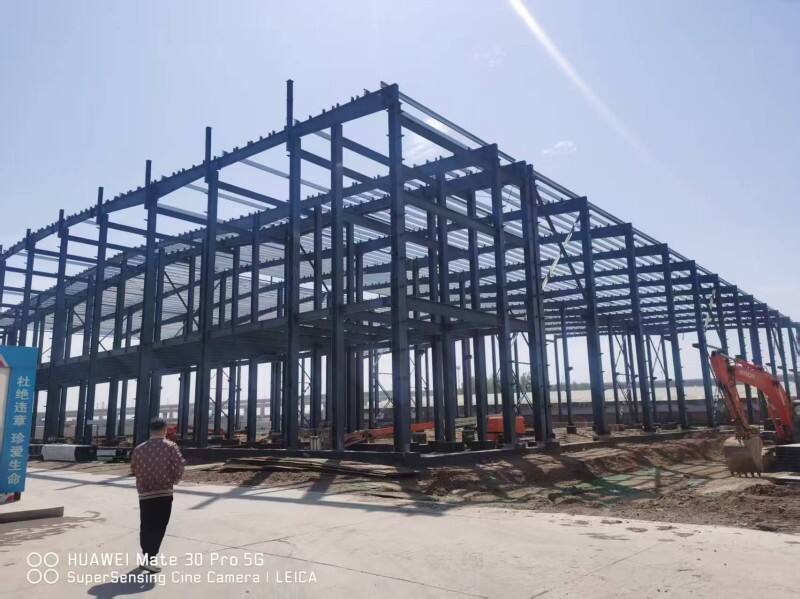
Superior Strength-to-Weight Ratio and Structural Efficiency
Reduced foundation loads and increased buildable height enabled by steel’s high strength-to-weight ratio
The strength to weight ratio of steel makes it possible to build much taller structures without needing such heavy support systems. Steel can hold up around eight times what it weighs, yet still comes in at 30 to 50 percent lighter compared to regular concrete frames. Looking at numbers from CTBUH for 2024, we see foundation requirements drop by roughly 25 to 40 percent when using steel instead. When talking about really tall buildings, these stats mean real savings in materials and construction time. Architects and engineers working on skyscrapers often find themselves reaching for steel because it just works better for these kinds of challenges.
- Shallower foundations (reducing excavation costs by ~18%)
- Greater achievable height within existing soil-bearing limits
- 15–20% material savings versus concrete core alternatives
This efficiency allows architects to extend vertical reach without compromising integrity—steel-framed towers now routinely exceed 100 stories, whereas concrete cores often hit practical height ceilings due to disproportionate foundation demands.
Steel structure vs. concrete core systems in supertalls: performance insights from Shanghai Tower and other 50+ story benchmarks
Shanghai Tower—128 stories tall—achieved its record height using a steel moment frame that weighed 34% less than a comparable concrete core would have required. Performance data across global 50+ story benchmarks confirms steel’s structural advantage:
| Metric | Steel Structure | Concrete Core |
|---|---|---|
| Weight per floor (avg) | 850–1,100 kg/m² | 1,300–1,600 kg/m² |
| Max practical height | 150+ stories | 80–100 stories |
| Foundation depth ratio | 1 : 0.8 | 1 : 1.2 |
The weight and stiffness advantages allowed Shanghai Tower to add 18 occupiable floors within the same foundation footprint specified for concrete alternatives. Additionally, steel’s lateral system flexibility reduces seismic mass by 22% compared to rigid concrete cores (NCSE 2023), enhancing resilience—and height potential—in high-risk zones.
Enhanced Seismic and Wind Resilience Through Ductility and Dynamic Response
Steel structure ductility in real earthquakes: lessons from Tohoku (2011) and Mexico City (2017)
The controlled ductility of steel - basically its capacity to bend and stretch significantly before breaking - has stood the test during big earthquakes around the world. Take the massive 2011 Tohoku earthquake for example. Steel framed buildings there managed to absorb all that violent shaking energy through their beams bending and connections flexing, which kept them upright even when the ground was accelerating at over twice gravity's normal pull. Then there was the 2017 Mexico City quake where newer steel buildings showed about 40% less damage than older concrete ones according to those detailed inspections after the dust settled. Why does this happen? Well, it comes down to how engineers intentionally design these structures with specific features that allow them to handle extreme forces while still staying intact.
- Capacity-protected connections, ensuring beams yield before columns
- Redundant load paths, distributing forces across multiple elements
- Strain-hardening detailing, guiding plastic hinge formation predictably
Mitigating lateral drift and vortex shedding in supertalls using tuned steel moment frames and braced cores
Above 300 meters, wind—not seismic activity—drives serviceability and safety requirements. Steel excels here through adaptable, high-performance systems:
- Tuned mass dampers, like Shanghai Tower's 1,000-ton pendulum, reduce peak accelerations by 30%
- Braced core systems, with diagonal steel members, improve stiffness-to-weight ratios by 50% versus concrete
- Aerodynamic shaping, enabled by steel’s formability, supports tapered profiles and façade articulation to disrupt vortex shedding
Wind tunnel testing shows steel moment frames consistently achieve lateral drift below H/500—meeting strict occupant comfort thresholds. Vortex-induced vibrations are further mitigated by tuned liquid column dampers integrated into steel supercolumns, dissipating energy via controlled fluid sloshing.
Faster, More Predictable Construction with Prefabricated Steel Structure
BIM-driven prefabrication: 30% schedule reduction on The Spiral (NYC) and implications for urban high-rise delivery
When Building Information Modeling meets prefabrication, high-rise construction gets a major efficiency boost because all those precise parts get made away from the actual building site. Take The Spiral in NYC as an example where builders saved around 30% on total construction time compared to traditional approaches. They also needed 40% fewer workers onsite and didn't have to deal with those frustrating weather delays that always seem to pop up during construction seasons. What happens when manufacturing takes place in factories? Components fit together down to the millimeter, which cuts back on wasted time fixing mistakes later on. Assembly becomes much smoother too since there are no unexpected holdups waiting for concrete to dry properly. Cities benefit as well with about 25% reduction in delivery trucks coming and going, meaning less noise and traffic headaches for nearby residents. Plus buildings can open their doors earlier, which means money starts flowing in sooner rather than later. Some projects see returns increasing by roughly $18,000 each month simply because everything goes faster and cheaper with prefabricated steel components.
Fire Safety, Durability, and Lifecycle Reliability of Modern Steel Structure
Steel buildings today are built to withstand fires thanks to two main approaches: their natural resistance to burning and added protective measures. When things get hot, special intumescent paints swell up and create a sort of thermal barrier layer on steel components, which slows down how quickly temperatures can climb inside those crucial parts of the structure. Pair this with proper fire insulation materials and smart compartment designs throughout the building, and we're looking at structures that maintain their strength for much longer periods during emergencies. This gives occupants plenty of time to get out safely, even when faced with really intense fires that would typically destroy conventional construction.
Steel structures built with corrosion resistant alloys and modern galvanization methods can last for many years without much maintenance, even when exposed to harsh conditions along coastlines or near industrial sites. Most steel frames last well past fifty years if inspected regularly and maintained properly, keeping their shape intact and able to support heavy loads throughout their lifespan. The fact that these materials hold up so well means significant savings over time compared to other options. Cities building new infrastructure need this kind of reliability because replacing damaged structures is expensive and disruptive to communities.
Sustainability Leadership: Recyclability and Lower Embodied Carbon in Steel Structure
Recycled content advantage: 93% average recycled steel vs. concrete’s linear material flow in core-and-shell systems
Steel plays a major role in making high rises more sustainable because it can be recycled infinitely and has much lower embodied carbon compared to other materials. Concrete follows what we might call an extractive approach where resources get used once and then discarded. But when using steel in those core and shell building systems, about 90 something percent comes from recycled sources. That means old buildings torn down become valuable components again for new structures without any loss in quality or performance. The circular nature of this process reduces the need for mining raw materials by around three quarters compared to producing brand new steel. And let's not forget about energy savings either. Research shows that making steel from scrap takes roughly a quarter of the energy required to produce fresh steel from iron ore. This significantly brings down the overall carbon footprint at the project level. Plus, steel doesn't lose strength or integrity even after being melted down and remade multiple times. For anyone concerned about building cities sustainably while maintaining density, steel stands out as one of the few materials that truly offers verification throughout its entire lifecycle from creation to reuse.
FAQ Section
Why is steel considered more efficient than concrete for tall buildings?
Steel offers a superior strength-to-weight ratio, allowing for taller structures with lighter foundations, thus reducing construction costs and enabling greater heights.
How does steel perform in seismic and wind conditions compared to concrete?
Steel's ductility makes it more resilient during earthquakes, while its dynamic response helps handle wind loads, offering better overall performance in such conditions.
What are the advantages of using prefabricated steel structures?
Prefabricated steel structures reduce construction time significantly, requiring fewer on-site workers and minimizing weather-related delays, leading to cost savings.
How does steel contribute to sustainability in construction?
Steel can be recycled indefinitely with lower embodied carbon than concrete, making it a sustainable choice for building projects.
Table of Contents
- Superior Strength-to-Weight Ratio and Structural Efficiency
- Enhanced Seismic and Wind Resilience Through Ductility and Dynamic Response
- Faster, More Predictable Construction with Prefabricated Steel Structure
- Fire Safety, Durability, and Lifecycle Reliability of Modern Steel Structure
- Sustainability Leadership: Recyclability and Lower Embodied Carbon in Steel Structure
- FAQ Section