 EN
EN

Why Modular Steel Structure Building Is Gaining Global Momentum
The modular steel construction method is changing how buildings get constructed around the world because it combines fast build times with strong structures and green credentials. Steel has this amazing property where it's both light and super strong, so architects can design much taller buildings without compromising safety. This makes sense especially in crowded cities where every inch counts. When parts are made in factories instead of onsite, mistakes drop dramatically – we're talking about roughly 90% fewer errors according to McGraw Hill data from last year. And projects finish anywhere between 30 to 50% faster than old school methods. Environmentally speaking, there's real value too. Factories generate about 40% less waste when making these components, and over the whole life of a building, carbon emissions come down by nearly a quarter. Sure, there are size limits due to transport issues – most modules fit within a 3.5 meter by 15 meter envelope – but clever logistics planning and easier crane work make up for this. Contractors report saving around $140 per square meter on labor costs as a result.
| Material | Modular Construction Market Share | Key Advantage |
|---|---|---|
| Steel | 48.2% | Strength & Recyclability |
| Concrete | 35.1% | Thermal Mass |
| Timber | 16.7% | Carbon Sequestration |
Demand is surging in healthcare, commercial, and industrial sectors—where seismic resilience, fire resistance, and rapid commissioning are non-negotiable. With steel projected to dominate nearly half the modular market by 2025, its recyclability, design flexibility, and alignment with net-zero building standards cement its role in sustainable urbanization.
Design and Standardization Frameworks for Steel Structure Building Modules
Structural Configurations: SHS, C-Sections, Bracing Cores, and Load-Path Continuity
Modular steel construction works best when using standard parts like Square Hollow Sections (SHS) and those C-shaped sections we all know. These components help spread loads evenly and make putting things together much faster than traditional methods. For stability against strong winds or earthquakes, most designs include integrated bracing systems at key points throughout the structure. The whole point of continuous load path design is to keep everything intact from ground level right up to the rooftop. What this means practically is fewer changes needed once work starts on site, since most of the precision happens back at the factory where conditions are controlled. When looking at connections between different elements, engineers spend extra time making sure they're strong enough but also quick to fabricate. Standardized profiles mean parts can be swapped between different projects too, which cuts down on wasted materials while still keeping buildings safe and allowing architects plenty of creative freedom in their designs.
Standardization Challenges and Interoperability Solutions Across Supply Chains
Getting true standardization up and running runs into several roadblocks. Different regions have their own codes, suppliers aren't always on the same page with tolerances, and material certifications get pretty fragmented. All these issues end up causing delays when parts need to fit together and result in lots of rework down the line. The industry has started tackling this problem through things like unified digital modeling protocols and OpenBIM frameworks. These tools help everyone involved - designers, fabricators, and those putting things together on site - share information much more smoothly. When companies adopt standardized bolted joint interfaces, modules actually work across different vendors without headaches. Global groups have also created cross border certification templates that make compliance a whole lot easier to handle. Putting all these approaches together cuts down procurement time by about 30 percent and means fewer mistakes during assembly. And let's not forget supply chain transparency platforms which track every component right from the mill to its final destination at construction sites, giving everyone peace of mind about where materials came from and how they got there.
End-to-End Implementation: Production, Logistics, and On-Site Assembly of Steel Structure Building Modules
Factory-based production of steel modules ensures precision manufacturing in controlled environments—eliminating weather-related disruptions and enforcing rigorous quality benchmarks at every stage.
Transportation Constraints and Module Dimension Optimization (3.5m × 15m Benchmark)
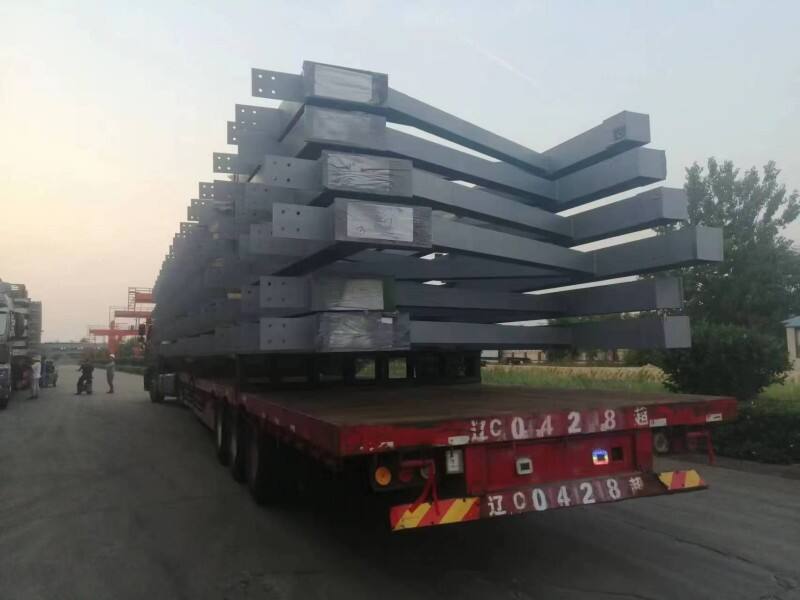
The rules about road transport basically set what's considered too big for modules, with most industries sticking around 3.5 meters wide by 15 meters long as their go-to measurement. Going with this standard means no need for special oversized permits, makes better use of flatbed trucks, helps spread out the weight properly, and secures loads more effectively. When designers think about these dimensions from day one of planning, they cut down on potential road disruptions and make it easier to coordinate shipments between different regions without constant headaches.
Crane Strategy and Site Access Planning for Efficient Steel Structure Building Installation
When putting things together on site, picking the right crane matters a lot depending on how heavy the modules are, what reach is needed, and when each part needs to go in. Good planning for getting equipment to the worksite means making sure roads can handle the load, setting up proper staging spots ahead of time, and checking the ground conditions properly before anything gets installed. This includes looking at whether the soil can support the weight and making certain those anchor bolts line up correctly so everything stays stable after it's all set up. Positioning cranes strategically cuts down on having to move them around during the job, which speeds things up considerably. What starts as a complicated build turns into something much smoother and faster when everything works together well from the start.
Sustainability and Lifecycle Value of Modular Steel Structure Buildings
Quantified Environmental Benefits: 40% Less Waste, 25% Lower Embodied Carbon
Building with modular steel offers real environmental benefits because most of the work happens away from the construction site. Studies show that this approach cuts down construction waste by about 40% compared to traditional building methods, which means less stuff ending up in landfills. The carbon footprint is also around 25% smaller thanks to better steel use, less energy needed at the actual construction site, and the fact that steel can be recycled again and again. Steel structures last longer than other materials, so they need less fixing over time. Plus, buildings made with steel can often be repurposed later on, something that fits right into circular economy thinking. With faster project timelines and fewer workers required on site, modular steel isn't just another building technique. It represents a smart choice for developers looking to create buildings that stand the test of time while keeping their carbon emissions low.
FAQ
What is modular steel construction?
Modular steel construction is a building method where components are manufactured in a factory setting and then assembled on-site, resulting in faster build times and fewer errors.
Why is modular steel construction gaining popularity?
It is becoming popular due to its combination of speed, strength, environmental benefits, cost-efficiency, and its ability to meet urbanization demands.
What are the dimensions of standard steel building modules?
Standard modules typically measure around 3.5 meters wide by 15 meters long, which optimizes transportation and logistics.
What are the main environmental benefits of modular steel buildings?
They offer a 40% reduction in waste and a 25% decrease in embodied carbon emissions compared to traditional construction methods.
Table of Contents
- Why Modular Steel Structure Building Is Gaining Global Momentum
- Design and Standardization Frameworks for Steel Structure Building Modules
- End-to-End Implementation: Production, Logistics, and On-Site Assembly of Steel Structure Building Modules
- Sustainability and Lifecycle Value of Modular Steel Structure Buildings
- FAQ