 EN
EN
Speed of Deployment: How Steel Structure Enables Rapid, Scalable Shelter Response
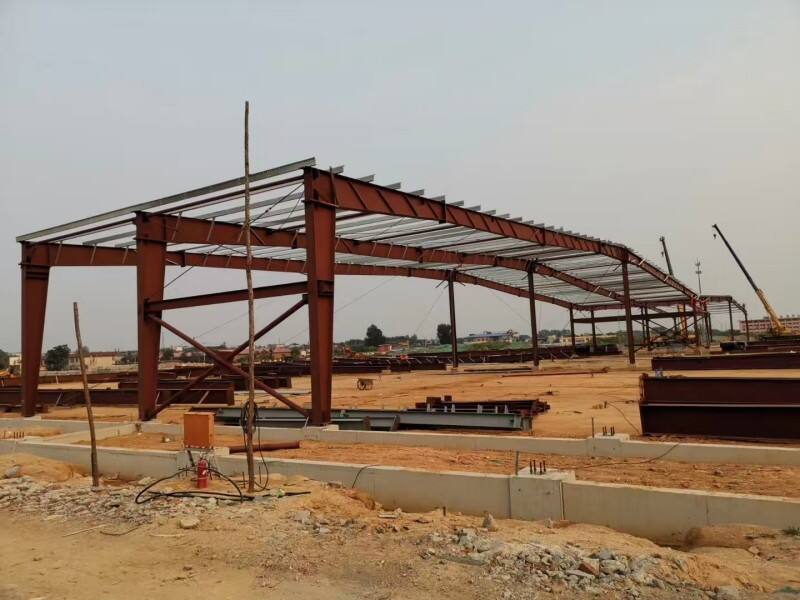
Prefabrication and Modular Steel Systems Cut Assembly Time to Under 72 Hours
Steel components made in factories really speed up how we respond after disasters hit hard areas. The columns, beams and trusses get cut precisely, welded together, and finished properly inside climate-controlled facilities long before they ever leave the warehouse. No need to worry about measuring wrong on site or having to fix mistakes later. These standardized parts connect through bolted brackets with pre-drilled holes everywhere needed, so teams can put them together without needing big cranes or special workers. Just snap things into place like solving a giant 3D puzzle. Imagine setting up a shelter for 500 people within three days flat when traditional methods take weeks. And because steel has such great strength relative to its weight, relief organizations can actually fly these materials into places where roads are destroyed or non-existent. The flat pack design works wonders for transportation too. A single regular sized truck holds enough stuff to build twenty separate family housing units. In situations where every hour counts during emergencies, getting shelters up fast means saving actual human lives rather than just moving boxes around.
Case Study: Steel-Frame Shelters in Bangladesh Cyclone Zones (2020–2023)
Cyclone Amphan forced around 2.4 million people to leave their homes in southern Bangladesh. The problem was worse because the clay soil got so soaked that traditional bamboo and thatch houses couldn't hold up anymore - many simply fell apart within just a few weeks. To address this crisis, relief organizations brought in special galvanized steel frame structures with fabric roofs stretched tightly over them. These were designed specifically to anchor quickly even on shaky ground. Skilled workers managed to put together each shelter in roughly 45 minutes flat. Within a month's time, they managed to install over 8,000 of these temporary homes throughout the Khulna and Barisal regions. What made these shelters particularly useful was their modular nature, allowing families to expand their living space gradually as they started rebuilding their lives. After tracking how well these structures held up, officials noted that about 92% remained intact through three consecutive cyclone seasons. Eventually, some of these emergency shelters evolved into something more permanent when builders added thermal modified wood cladding instead of keeping the original fabric roofs. Looking at this whole process shows why steel remains such a valuable material during different stages of disaster recovery, going beyond just providing immediate shelter solutions.
Resilience and Safety: Steel Structure’s Superior Performance in Extreme Conditions
Engineering Advantages: High Strength-to-Weight Ratio, Ductility, and Predictable Load Behavior
When it comes to disaster relief housing, steel shelters beat out traditional materials because of their unique combination of engineering features. The first thing worth noting is how strong steel is relative to its weight. This means these shelters can handle heavy loads without being too bulky, which matters a lot when transporting them to remote areas or building on shaky ground. Another big plus is steel's ability to bend instead of break under stress. During earthquakes or hurricane-force winds, steel structures deform in a controlled way that actually absorbs some of the impact energy rather than just cracking apart. Research in the journal Engineering Structures backs this up, showing steel buildings stand up better to quakes than other materials by over 30%. What makes steel really special though is its consistency. Because the material behaves predictably across different conditions, engineers can calculate safety factors with confidence. Real world tests in places prone to cyclones have shown steel frame shelters surviving wind speeds around 150 mph without failing, keeping people safe inside even during the worst storms.
Adaptability and Lifecycle Value: From Shipping Containers to Permanent-Grade Steel Shelters
Repurposing ISO Containers: Logistics Benefits vs. Thermal, Ventilation, and Expansion Constraints
ISO containers offer immediate logistical advantages: standardized dimensions simplify intermodal transport, stacking, and rapid on-site assembly. Their inherent steel construction provides basic weather resistance and structural robustness. Yet repurposing them as habitable shelters introduces persistent performance gaps:
- Thermal inefficiency: Highly conductive walls cause extreme interior temperature swings without extensive insulation retrofits.
- Condensation and ventilation deficits: Poor air exchange and cold bridging promote mold growth—requiring costly HVAC or passive ventilation upgrades.
- Spatial inflexibility: Fixed 8'x8' cross-sections and rigid geometry hinder room configuration, multi-family layouts, or vertical expansion.
While useful for short-term triage, these constraints compromise long-term habitability and increase lifecycle costs—limiting their value beyond initial emergency response.
Beyond Containers: Engineered Light-Gauge and Cold-Formed Steel Framing for Upgradable Habitats
Cold-formed light-gauge steel (CFS) framing represents a purpose-built evolution beyond container reuse. Components are precision-manufactured off-site, shipped flat-packed, and assembled using simple tools—reducing transport volume by up to 40% versus bulkier alternatives. Unlike rigid containers, CFS systems are inherently adaptable:
- Wall panels, floor joists, and roof trusses can be reconfigured to support single-room shelters, multi-family units, or even two-story community centers.
- Integrated cavity spaces accommodate continuous insulation, vapor barriers, and mechanical systems—addressing thermal comfort and condensation control at the design stage.
- Structural continuity allows seamless upgrades: temporary shelters can evolve into permanent, code-compliant buildings through phased reinforcement and cladding replacement.
This scalability transforms steel from a stopgap solution into a strategic infrastructure investment—one that grows with community needs and supports long-term recovery, not just rapid response.
FAQ
Why is steel structure preferred for rapid shelter deployment?
Steel structures are preferred for rapid shelter deployment because they allow for quick assembly and scalability during emergencies. Prefabricated components cut assembly time to under 72 hours, and the lightweight nature of steel facilitates easy transportation, so shelters can be set up swiftly even in remote or disaster-stricken areas.
How did steel-frame shelters perform in Bangladesh's cyclone zones?
In the Bangladesh cyclone zones, steel-frame shelters proved to be effective by providing quick housing solutions that maintained over 92% structural integrity through three consecutive cyclone seasons. They offered modular options, allowing families to expand spaces as needed.
What are the engineering advantages of steel in extreme conditions?
Steel has a high strength-to-weight ratio, which makes it capable of bearing heavy loads while remaining easy to transport. Its ductility allows for controlled deformation, which absorbs impact energy during events like earthquakes, offering better performance and safety.
What limitations do ISO containers have when used as shelters?
While ISO containers offer logistical benefits such as standardized dimensions and structural robustness, they have limitations including thermal inefficiency and poor ventilation, which can lead to condensation issues and mold growth if not retrofitted with expensive systems.
How do cold-formed light-gauge steel systems provide better habitat solutions?
Cold-formed light-gauge steel systems are adaptable for various configurations and upgrading possibilities. They offer continuous insulation and better thermal management, allowing shelters to evolve into permanent structures through simple modifications.
Table of Contents
- Speed of Deployment: How Steel Structure Enables Rapid, Scalable Shelter Response
- Resilience and Safety: Steel Structure’s Superior Performance in Extreme Conditions
- Adaptability and Lifecycle Value: From Shipping Containers to Permanent-Grade Steel Shelters
-
FAQ
- Why is steel structure preferred for rapid shelter deployment?
- How did steel-frame shelters perform in Bangladesh's cyclone zones?
- What are the engineering advantages of steel in extreme conditions?
- What limitations do ISO containers have when used as shelters?
- How do cold-formed light-gauge steel systems provide better habitat solutions?