 EN
EN

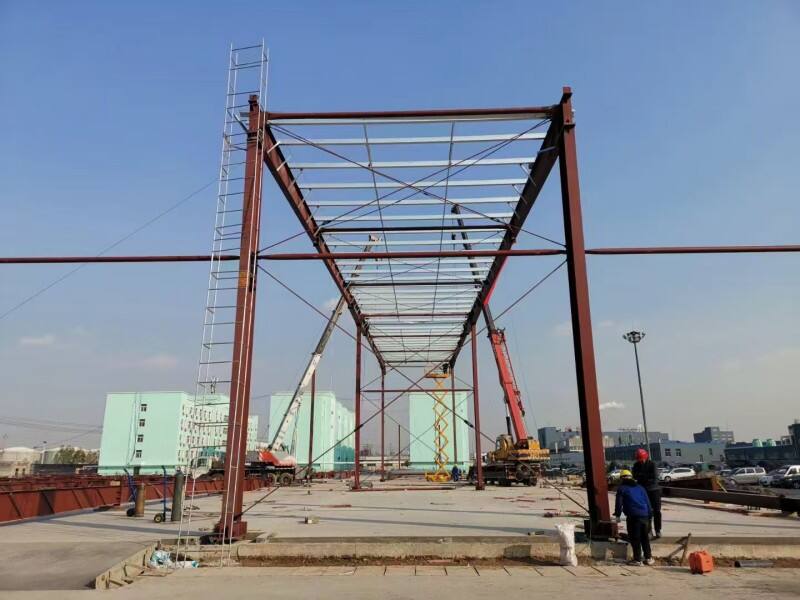
Superior Structural Performance: Strength, Lightness, and Resilience
High tensile strength and optimal strength-to-weight ratio enabling taller, leaner, and more adaptable designs
Steel stands out when it comes to building structures because of its amazing tensile strength and better strength compared to weight than most other materials used today. Engineers can actually build higher and thinner structures while using way less material overall. For instance, steel frames tend to weigh about 30 percent less than similar concrete buildings but still hold up just fine. The material's ability to bend without breaking lets architects get creative with their designs too. Think about those cool cantilevered sections or complex facade shapes that look great but would collapse with other materials. This kind of adaptability really matters in crowded cities or areas with poor soil conditions where there simply isn't room for traditional construction methods or the ground won't support heavy foundations.
Quantified load-bearing advantages over concrete and timber—validated by AISC, NIST, and NCSEA benchmarks
Peer-reviewed benchmarks from the American Institute of Steel Construction (AISC), National Institute of Standards and Technology (NIST), and National Council of Structural Engineers Associations (NCSEA) confirm steel’s consistent load-bearing superiority:
| Material | Load Efficiency | Span Capacity | Deflection Resistance |
|---|---|---|---|
| Structural Steel | 1.8× concrete | +40% timber | 65% lower than timber |
| Reinforced Concrete | Baseline | −15% steel | 2.1× higher than steel |
| Heavy Timber | 0.7× concrete | Baseline | Baseline |
In high-rise applications, steel achieves 20–35% greater load efficiency than concrete; it also enables 25% longer unsupported spans than timber. These advantages—validated through seismic simulation, wind tunnel testing, and real-world performance data—translate directly into reduced material use, improved safety margins, and greater design latitude.
Accelerated Project Delivery via Prefabrication and Modular Steel Structure Assembly
Prefabrication and modular assembly fundamentally accelerate steel construction timelines while enhancing precision and predictability. Standardized components manufactured off-site under controlled conditions minimize field labor, weather dependency, and coordination delays.
30–50% reduction in on-site construction time and labor dependency
When building components like beams, columns, connections, and envelope panels in factories rather than on site, construction projects typically save around 30 to 50 percent of their time compared to traditional methods such as pouring concrete or working with heavy timber. The factory approach means we don't need so many specialized workers who are hard to find these days. Plus, bad weather doesn't bring everything to a halt anymore since most work happens indoors. And there's just less room for mistakes when people aren't manually measuring and cutting materials onsite all day long. With factory made parts, dimensions tend to be spot on, which cuts down on fixing errors later. Safety also gets better because fewer workers are exposed to dangerous conditions at height or near machinery. All these factors together mean buildings get completed quicker and ultimately cost less from start to finish.
Streamlined coordination between design, fabrication, and erection phases in BIM-integrated workflows
Building Information Modeling, or BIM as it's commonly called, brings together all aspects of construction in one place - from how things are designed to when components get made and how everything fits together on site. When teams work within this system, there's far less confusion between different departments. Problems where pipes might hit beams or electrical lines cross structural supports can be spotted early instead of causing delays later. The scheduling gets tighter too, and buying materials becomes much more efficient since we know exactly what's needed when. Steel construction projects using BIM tend to stick to their tight timelines, which matters a lot for things like hospital expansions that need to open by certain dates or roadwork during busy seasons when delays cost everyone money.
Long-Term Durability and Risk-Resilient Performance of Steel Structure
Inherent resistance to rot, pests, moisture, and corrosion—supported by 50+ year lifecycle studies
Because steel is made from inorganic materials, it just doesn't rot away, get eaten by bugs, or break down from biological factors. This means we don't have to use those harmful chemicals on wood products to keep them from decaying. Add some modern protective treatments like galvanized coatings, metal spray finishes, or special fire resistant systems, and steel can stand up to corrosion in damp areas or near saltwater for most of the time. Real world tests show these steel structures last well past half a century without much wear and tear at all. The surface of steel isn't porous like other building materials, so mold struggles to take hold and water damage becomes a rare problem. Maintenance expenses stay really low too, around three cents for every square foot each year compared to twelve cents when dealing with concrete repairs facing similar conditions.
Proven seismic stability (FEMA P-1020) and fire-rated performance (ASTM E119) for mission-critical builds
The ductile properties of steel give it remarkable resistance against earthquakes, able to absorb roughly three times as much ground movement energy compared to brittle concrete structures. Plus, buildings made with steel can still be used after seismic events, which is why they meet those FEMA P-1020 requirements for important facilities. Steel doesn't burn either, and expands consistently when heated so we know how it will act in a fire situation. Testing under ASTM E119 shows that steel constructions with proper protection can hold up for three hours in a fire. At around 1,200 degrees Fahrenheit - what most fires reach inside enclosed spaces - steel keeps about 60% of its strength from normal conditions, whereas reinforced concrete drops down to only 20%. Because of this big difference in performance, steel structures stay standing longer during evacuations and emergencies. That's why hospitals need it, emergency command posts rely on it, data centers specify it, and basically any facility where people's lives depend on the building staying intact chooses steel construction.
Sustainability Leadership: Recyclability, Embodied Carbon Reduction, and Net-Zero Readiness
When it comes to sustainable building materials, steel stands out because of how circular it is, its ability to cut down on carbon emissions, and just plain works better operationally. Steel happens to be the number one recycled material planet wide. What makes it so special? Well, when steel gets reused over and over again, it keeps all its original strength without losing quality, and almost nothing ends up in landfills at the end of its life. Looking back since the early 90s, American steel makers have managed to slash their carbon footprint by over half thanks to things like electric arc furnaces, better recycling practices, and more renewable energy use. Studies consistently find that buildings made with steel frames actually emit 30 to 40 percent less during operations than similar structures built with concrete or wood. Why? Because they need lighter foundations, have better insulation properties, and work well with advanced exterior finishes. As countries around the world push harder toward those net-zero goals by mid century, steel remains a smart choice for construction projects needing materials that can be taken apart easily, adapted for new purposes, and continue reducing their environmental impact year after year.
FAQ
Why is steel considered superior in structural performance?
Steel is praised for its high tensile strength and optimal strength-to-weight ratio, allowing architects to design taller and leaner structures using less material while maintaining durability and resilience.
How does steel contribute to accelerated project delivery?
Steel enables faster project completion through prefabrication and modular assembly, reducing on-site construction time and labor dependency.
What makes steel sustainable compared to other building materials?
Steel is highly recyclable and has contributed to significant embodied carbon reduction. It retains its strength through multiple recycling processes, making it environmentally advantageous.
Table of Contents
- Superior Structural Performance: Strength, Lightness, and Resilience
- Accelerated Project Delivery via Prefabrication and Modular Steel Structure Assembly
- Long-Term Durability and Risk-Resilient Performance of Steel Structure
- Sustainability Leadership: Recyclability, Embodied Carbon Reduction, and Net-Zero Readiness
- FAQ