 EN
EN

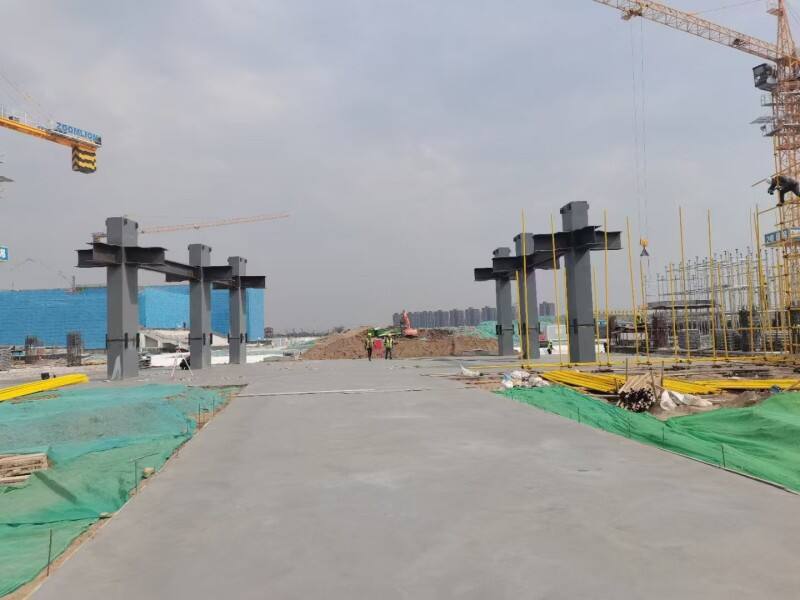
Multihazard Resilience of Steel Structure: Earthquakes, Wind, and Fire
Steel structure delivers unparalleled protection across multiple disaster scenarios through material properties engineered for resilience.
Ductility and Energy Dissipation in Seismic Events
The ductile nature of steel allows it to deform plastically when subjected to earthquake forces, which means it can absorb and spread out seismic energy rather than failing completely. This characteristic actually helps buildings stay standing longer because the steel yields at those critical beam to column joints but keeps the overall structure intact, even when ground shaking reaches intensities above 0.4g. Plus, steel has an impressive strength compared to its weight, so structures built with it experience lower inertial forces during quakes. All these factors contribute significantly to keeping people safe in buildings during those rare but powerful seismic events defined in building codes like ASCE 7.
Aerodynamic Efficiency and Uplift Resistance in High-Wind Events
Steel frameworks designed for extreme weather conditions stand up against hurricane force winds thanks to their specially shaped profiles that cut through air resistance, plus strong resistance against being pulled upward. The way these structures handle wind pressure is pretty remarkable too. When winds hit over 150 miles per hour, the continuous load path system takes those forces right down from roof materials all the way to the ground level. Connection points between different parts of the building are built to handle uplift forces well beyond standard requirements, sometimes reaching over 30 pounds per square foot. What makes this really effective is how predictably the steel bends and flexes during severe storms. Buildings constructed this way stay functional even when hit by Category 4 hurricanes along coastlines, keeping people inside safe and allowing essential operations to continue running smoothly despite the chaos outside.
Inherent Non-Combustibility and Predictable Performance in Wildfires
Steel structures don't burn and keep their shape and strength even when exposed to extreme heat from wildfires reaching around 1,200 degrees Fahrenheit. Wood behaves completely differently here. Most types of timber lose all structural integrity long before hitting 1,000 degrees, whereas steel can still hold about 70 to 80 percent of its original strength at those temperatures. This makes a real difference during emergencies, giving people crucial extra minutes to evacuate safely. Special protective coatings called intumescent paints form a thick insulating layer when heated, which acts as a fire shield. These coatings help buildings constructed with steel frames comply with building codes for areas where wildfires are common, ensuring safety without compromising on construction quality.
Flood and Moisture Resilience in Steel Structure Systems
Advanced Corrosion Protection: Galvanizing, Coatings, and Flood-Adapted Detailing
Steel's non-porous, non-combustible composition prevents water absorption—making it inherently more flood-resilient than porous alternatives like wood or masonry. Key protective strategies include:
- Hot-dip galvanizing, which forms a sacrificial zinc layer effective even during full submersion;
- Epoxy and polyurethane coatings, engineered to resist hydrostatic pressure and chemical exposure from contaminated floodwaters;
- Flood-adapted detailing, such as elevating connections above base flood elevation and integrating drainage cavities into structural members.
When properly specified, these measures extend service life by more than 30 years in coastal flood zones and eliminate moisture-related degradation—including rot, mold, and hidden corrosion—that drives post-disaster restoration costs.
Design Innovation and Code Integration for Steel Structure Resilience
Resilient Connection Design, Elevation Strategies, and Pre-Engineered Metal Buildings (PEMB)
Today's steel designs incorporate resilience against multiple hazards right from the system level. Moment resisting frames with those special ductile bolted connections help soak up earthquake energy. The extended steel columns basically lift important parts above potential floodwaters. And then there are those corrosion resistant coatings that keep things safe even when submerged. Pre Engineered Metal Buildings, or PEMBs as they're called, bring all these features together thanks to factory controlled manufacturing processes. This ensures components are made with precise tolerances so they can handle the combination of earthquakes, strong winds, and flooding without fail. Standardizing these building systems actually saves about 30% on construction time while still meeting all the necessary codes and regulations for safety and performance standards.
Alignment with ASCE 7, IBC, and FEMA P-58 for Performance-Based Resilience
The measurable mechanical characteristics of steel like consistent yield strength, predictable deformation limits, and stable fatigue behavior make it possible to integrate directly with performance based standards such as ASCE 7 for minimum design loads, IBC covering life safety requirements, and FEMA P-58 which deals with quantitative loss estimation. Because these properties are so predictable, engineers can create fragility curves, figure out potential repair costs, and plan for buildings to get back to normal operation within about three days after an event. When looking at areas prone to hurricanes, steel systems that follow building codes show around 40 percent fewer losses over their entire lifespan than traditional options. This makes steel a key component when planners want to build infrastructure that stands up better against extreme weather events.
FAQ
What makes steel structures resistant to earthquakes?
Steel's ductility allows it to deform plastically, absorbing seismic energy without collapsing, keeping structures intact even during strong earthquakes.
How do steel structures withstand high-wind events?
Steel structures feature aerodynamic designs and strong connections that resist uplift and handle wind forces, maintaining functionality during hurricanes.
Are steel structures fireproof?
Steel is non-combustible and retains strength at high temperatures. Intumescent coatings provide additional fire protection, ensuring structural integrity.
How do steel structures prevent flood damage?
With non-porous materials and protective coatings, steel structures resist water absorption and corrosion, offering resilience in flood-prone areas.