 EN
EN

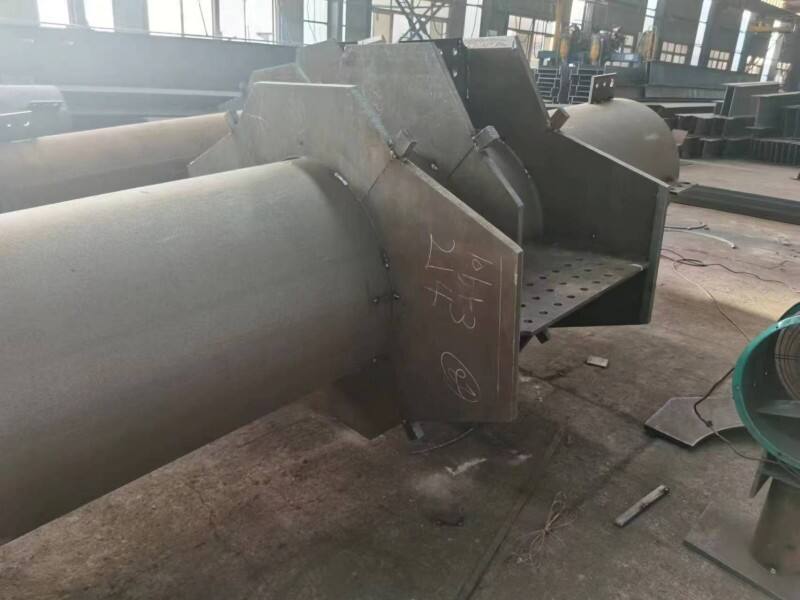
Ductility and Controlled Energy Dissipation in Steel Structures
How ductile steel framing accommodates large inelastic deformations without collapse
Steel buildings take advantage of how flexible structural steel is when dealing with earthquake forces by allowing it to deform in a controlled way that isn't completely elastic. Brittle materials tend to break all at once, but steel actually bends and stretches predictably after reaching its normal strength limits. At those crucial points where beams meet columns, steel goes through noticeable plastic rotation yet still holds up under weight. What makes this work so well is that steel can soak up energy during shaking events thanks to these stable cycles of stretching and returning. Modern steels like ASTM A992 and A572 can stretch about 20% before finally breaking apart. Engineers apply what's called capacity design principles so that certain parts of the building, typically beams rather than critical supports, give way first like built-in safety mechanisms. Columns and foundation systems stay strong and unchanged. This intentional design approach stops entire buildings from collapsing catastrophically, keeping people safe even when floors move more than 2.5% relative to each other during major quakes.
Comparative energy absorption: steel vs. reinforced concrete and masonry under cyclic loading
When buildings face repeated earthquake forces, steel generally does better than other materials when it comes to how much energy gets absorbed during shaking. Tests in labs have found that steel frames can take in about 25 to 40 percent more energy compared to similar concrete structures. Why? Because steel doesn't crack progressively like concrete does, and its material properties allow for consistent strengthening as it bends. Most masonry buildings start failing around drift ratios of only 0.3 to 0.5 percent, but steel frames built according to modern codes can handle drifts between 2.5 and 4 percent without collapsing. The reason lies in steel's uniform internal structure which lets it bend repeatedly until it reaches maximum capacity, turning roughly 70% of earthquake energy into heat instead of structural damage. This kind of resilient behavior explains why engineers rely on steel so much when designing buildings in areas prone to major earthquakes.
Reduced Seismic Inertial Forces Due to Steel's High Strength-to-Weight Ratio
Structural steel's exceptional strength-to-weight ratio—up to seven times greater than reinforced concrete or masonry—directly reduces seismic inertial forces. Lower mass translates to proportionally smaller base shear demands during ground motion, fundamentally improving dynamic response and reducing foundation loads.
Lower Base Shear Calculations per ASCE 7-22 §12.8.1 and Implications for Foundation Design
Per ASCE 7-22 §12.8.1, seismic base shear is directly proportional to effective seismic weight. Steel structures typically exhibit 20–30% lower calculated base shear than comparable concrete buildings—a reduction that cascades into tangible design efficiencies:
- Smaller, shallower foundations with reduced concrete volume and reinforcement
- 15–25% shorter foundation construction cycles
- Mitigated soil-structure interaction risks, particularly in liquefaction-prone or soft-soil sites where lighter mass lowers potential for differential settlement
These advantages extend beyond initial cost savings, enhancing constructability and long-term geotechnical reliability.
Christchurch Case Study: 6-Story Cold-Formed Steel Apartment Demonstrating Faster Recovery and Lower Damage
A six-story cold-formed steel apartment in Christchurch sustained only minor non-structural damage during the 2011 Canterbury earthquakes—while adjacent concrete and unreinforced masonry buildings were condemned. Post-event assessment confirmed:
- Residual drift of just 0.28%, well below the ASCE 7-22 code limit of 0.5%
- Full reoccupation achieved in 70 days—versus 18+ months for comparable concrete structures
- Repair costs totaling under 5% of replacement value, compared to 35–60% for masonry counterparts
The building's resilience stemmed from its ability to undergo large, reversible inelastic deformations without fracture—validating steel's role in enabling not only life safety but also rapid functional recovery.
Advanced Lateral Force Resisting Systems for Site-Specific Steel Structure Performance
Design trade-offs among concentrically braced frames, buckling-restrained braces, and steel plate shear walls
Picking the right lateral system involves looking at performance factors, how easy it is to build, and what the building's design allows for, not just maximum strength ratings. Concentrically braced frames or CBFs tend to be cost effective and show predictable behavior when stressed, but those diagonal members really mess with creating open spaces in buildings. Buckling restrained braces BRBs solve the problem of overall buckling issues and can absorb about two to three times more energy than regular braces before failing, although these systems need close attention during manufacturing and thorough checks on site after installation. Steel plate shear walls SPSWs give excellent initial rigidity and have built in backup through tension field effects, which makes them great choices for tall buildings. The downside? Those thick edge components put extra demands on foundations and create headaches when trying to fit mechanical systems into the space.
Key comparative considerations include:
- Drift control: SPSWs reduce inter-story drift by 40–60% relative to CBFs in high-seismic zones
- Constructability: BRBs simplify connection detailing but necessitate certified welders and third-party verification
- Space efficiency: SPSWs minimize structural depth yet constrain ceiling heights and MEP routing
Hybrid systems—such as BRB-SPSW combinations—are increasingly adopted to balance stiffness, ductility, and adaptability across varying hazard levels and programmatic needs.
Standards Alignment and Next-Generation Innovations in Steel Structure Seismic Design
The way we design steel structures to withstand earthquakes has changed quite a bit lately, thanks mostly to new guidelines set out in documents like ASCE 7-22 and Eurocode 8. These rules require engineers to think about things differently than before. Instead of just following basic force formulas, they need to run nonlinear models, check displacements against certain thresholds, and really pay attention to how ductile the whole system remains during shaking events. The research field is moving fast right now. For instance, buildings with self-centering frames that use special tendons and memory alloys can almost completely bounce back after quakes without leaving permanent damage. Some companies are printing connection parts in three dimensions to better control where energy gets absorbed during vibrations. And there's this cool tech with fiber optic sensors built into structures that actually tell us what's happening with stress levels and deformations as it happens. According to a study published last year in the Journal of Structural Engineering, computer tools powered by artificial intelligence have managed to reduce the time needed for design iterations by around 40%. This means engineers can test their ideas much quicker and get more confidence in how buildings will behave under extreme conditions. As all these technologies become more mainstream, steel structures aren't just sitting there waiting for trouble anymore. They're becoming smart systems that respond to real world data, setting new standards for earthquake safety in our cities.
FAQ Section
How does steel accommodate inelastic deformations during earthquakes?
Steel is designed to undergo controlled inelastic deformations, allowing energy dissipation through predictable bending and stretching.
Why is steel preferred over reinforced concrete in earthquake-prone areas?
Steel can absorb more energy compared to concrete, reducing potential structural damage and offering better performance under cyclic loads.
How does the strength-to-weight ratio of steel impact seismic design?
Steel's high strength-to-weight ratio decreases seismic forces, resulting in smaller foundation loads and improved dynamic response.
What are some advanced systems for steel structure performance?
Advanced systems include concentrically braced frames, buckling-restrained braces, and steel plate shear walls, each offering unique benefits.
Table of Contents
- Ductility and Controlled Energy Dissipation in Steel Structures
- Reduced Seismic Inertial Forces Due to Steel's High Strength-to-Weight Ratio
- Advanced Lateral Force Resisting Systems for Site-Specific Steel Structure Performance
- Standards Alignment and Next-Generation Innovations in Steel Structure Seismic Design