 EN
EN

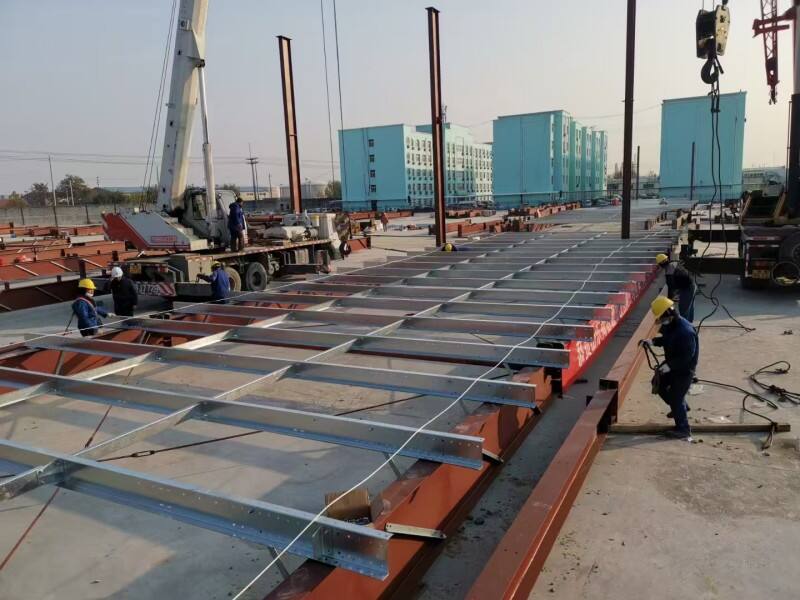
Structural Feasibility Assessment for Steel Structure Building Reuse
Evaluating Load Path Integrity and Material Condition in Legacy Steel Frames
When looking at old steel structures, engineers need to check how well the load paths are maintained and look for signs of material breakdown over time. Many older steel frames show problems like rust buildup, tiny cracks from constant stress, or sections that have worn away completely, which can seriously weaken the whole structure and put safety at risk. These days, inspectors use advanced tests that don't damage the materials themselves. Things like ultrasonic thickness measurements and magnetic particle checks help figure out exactly how strong the remaining metal is and spot any hidden flaws that aren't visible to the naked eye. The bolts holding everything together and the welds between different parts get examined under magnification to see if they're still transferring loads properly across the structure. All these factors come together when assessing whether an aging steel framework remains safe and functional for continued use.
| Assessment Focus | Key Methodology | Risk Indicator |
|---|---|---|
| Material Thickness | Ultrasonic Testing | >15% Section Loss |
| Connection Integrity | Dye Penetrant Inspection | Fracture Patterns |
| Corrosion Damage | 3D Scanning & Pit Depth Analysis | Perforation Risk |
Historical data shows that 78% of industrial steel structures built before 1970 require localized reinforcement due to stress concentrations. Engineers combine field measurements with digital twin simulations to model how original load paths interact with proposed adaptive reuse configurations—ensuring continuity under updated loading scenarios.
Leveraging Modern Structural Analysis to Validate Reuse Potential
FEA changes the game when it comes to figuring out if old structures can handle modern stressors. The software basically tests how existing frames react to all sorts of forces we see today, like earthquakes shaking things around, strong winds pulling upwards, and regular day-to-day weight loads that meet today's building standards. Engineers feed in detailed measurements captured through laser scanning into these computer models, which allows for pretty accurate simulations. What's interesting is that cloud computing has really sped things up lately. These simulations run about 60 percent quicker compared to older methods, which means engineers can try different strengthening approaches much faster without waiting ages for results.
This approach identifies whether selective strengthening—such as adding flange plates or stiffeners—is sufficient, or if full bracing systems are needed. Engineers validate outcomes through targeted scenarios:
- Comparing deflection patterns between as-built and retrofitted conditions
- Simulating progressive collapse when removing redundant members
- Testing connection capacity under cyclic loading
The result is a balanced solution that meets safety standards without over-engineering—preserving structural integrity while optimizing cost and schedule.
Risk-Informed Planning and Financial Viability of Steel Structure Building Conversions
Early Due Diligence: Mapping Structural Constraints and Zoning Compliance
Feasibility studies are really important for any project involving adaptive reuse. When looking at old buildings, engineers need to check those steel frames thoroughly against today's load requirements right from the start. The numbers back this up too. According to European guidelines on building reuse, around three out of four structural problems during conversions come down to hidden changes made over time plus corrosion issues. That's why non-destructive testing methods should be part of the process well before anyone starts drawing plans for new designs. Skipping these tests can lead to major headaches later on when unexpected weaknesses show up during construction.
Simultaneously, zoning compliance demands proactive engagement with municipal authorities. In heritage districts, height restrictions, facade preservation mandates, or occupancy limitations may constrain adaptation strategies. Integrating structural and regulatory assessments during the schematic design phase reduces change orders by 40%, according to construction industry analyses.
Contingency Budgeting and Lifecycle Cost Modeling for Steel Structure Building Projects
Financial viability hinges on transparent risk allocation. Contingency reserves typically constitute 15–25% of total project costs for steel conversions—significantly higher than the 10% standard for new construction. Robust lifecycle cost modeling must account for:
- Decommissioning expenses for hazardous materials (e.g., lead paint, asbestos)
- Seismic retrofit requirements exceeding code minimums
- Maintenance differentials between original and reused components
Research in structural reliability economics demonstrates that incorporating statistical uncertainties in material degradation—rather than relying on deterministic assumptions—can reduce 50-year ownership costs by 18%. This evidence-based approach validates adaptive reuse as a financially strategic alternative to demolition.
Embodied Carbon Reduction Through Steel Structure Building Reuse
Quantifying Carbon Savings: Reuse vs. New Construction of Steel Structure Buildings
Reusing existing steel structure buildings delivers dramatic embodied carbon reductions compared to new construction. Studies confirm retrofitting saves 50–75% of embodied carbon emissions, primarily by avoiding emissions from material extraction, manufacturing, and transportation. For example:
| Carbon Impact Factor | Reused Steel Structure | New Construction |
|---|---|---|
| Material production emissions | Avoided entirely | 2.33 MT CO₂/ton |
| Transportation footprint | Minimal (local mods) | Significant |
| Total lifecycle savings | 50–75% | Baseline |
The reason we save so much here is because we keep the original steel framework intact. Steel just lasts forever really, which means these structures can keep going for decades longer than expected. Then there's this new EAF tech that makes things even better. Most of what goes into these furnaces is recycled scrap metal anyway around 90% give or take. And carbon emissions drop dramatically too, somewhere in the neighborhood of 70% less compared to old school blast furnaces. When companies focus on reusing what already exists, they turn those old industrial sites into green facilities without sacrificing how well everything works today.
Proven Adaptive Reuse Models: Industrial and Commercial Steel Structure Buildings
Factory-to-Workspace Transformation: Larkin Building (Buffalo, NY)
The Larkin Building stands as one great example of what happens when old industrial spaces get a second life. What was once a bustling factory floor in Buffalo has now become sleek office space that still carries traces of its past. The developers kept most of the original steel bones and flooring intact, which cut down on carbon emissions by around 40% compared to tearing everything down and starting fresh. They had to beef up some of those load bearing columns though, plus install better earthquake protection so the place meets today's safety codes. And somehow they managed all this without messing with the building's historic front face that still looks just like it did back in the day. Looking at projects like this makes me wonder why we don't do more renovations instead of always building brand new stuff from scratch.
Warehouse-to-Logistics Hub Conversion: The Chicago Rail Yards Project
This century-old warehouse transformed into a regional distribution center illustrates steel structure building adaptability for logistics operations. Its existing clear-span steel framing proved ideal for material handling equipment, minimizing structural modifications. Key interventions included:
- Adding reinforced mezzanines without altering primary columns
- Updating fire protection systems within the original structural grid
- Implementing energy-efficient cladding while preserving steel skeleton integrity
The conversion diverted 850 tons of steel from landfills while achieving Class A warehouse specifications—showcasing how industrial steel buildings can evolve with market needs and sustainability goals.
Frequently Asked Questions
What is structural feasibility assessment in steel building reuse?
A structural feasibility assessment involves evaluating the load path integrity and material conditions of legacy steel frames to ensure their safety and functionality for continued use.
How does modern software aid in assessing old steel structures?
Modern software like Finite Element Analysis (FEA) allows engineers to simulate stresses on existing structures under modern conditions, speeding up the process by utilizing laser scanning and cloud computing.
What are the benefits of reusing steel structures versus new construction?
Reusing steel structures significantly reduces embodied carbon emissions by 50–75% by avoiding the production and transportation emissions associated with new construction.
What are some examples of successful steel structure reuse projects?
Notable projects include the transformation of the Larkin Building into office space and the Chicago Rail Yards Project, both of which exemplify the adaptability of steel structure buildings for modern needs.
Table of Contents
- Structural Feasibility Assessment for Steel Structure Building Reuse
- Risk-Informed Planning and Financial Viability of Steel Structure Building Conversions
- Embodied Carbon Reduction Through Steel Structure Building Reuse
- Proven Adaptive Reuse Models: Industrial and Commercial Steel Structure Buildings
- Frequently Asked Questions