 EN
EN

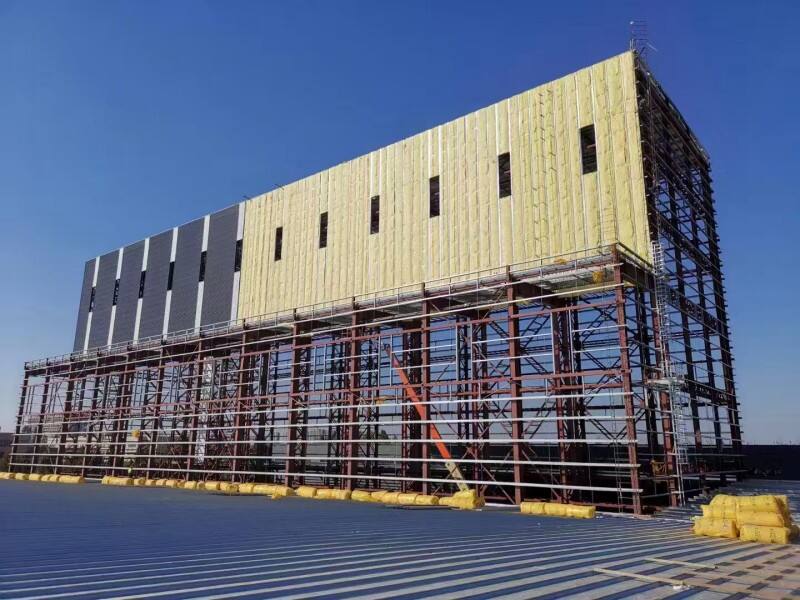
Why Steel Structure Buildings Demand Integrated Waterproofing Design
The Envelope Paradox: High-Strength Steel Inherently Waterproof
Despite being strong structurally, steel has a real weakness when it comes to water getting in, especially around those tricky spots like joints, seams, and where fasteners go through. Most of the time, corrosion happens because of moisture exposure, and this is actually what causes steel to break down over time, making it less reliable in the long run. Monolithic materials don't have these issues, but steel buildings rely completely on how well all those thousands of individual connections hold up. The problem gets worse with thermal expansion too. As temperatures change throughout the day, sealants get stressed out, which leads to faster wear and tiny gaps forming between components. Because of this fundamental issue, waterproofing isn't something that can just be tacked on later. Instead, it needs to be part of the original design process as a complete system solution rather than trying to fix things after the building is already constructed.
Layered Defense Principle: Coordinating Air, Vapor, Water, and Thermal Barriers
True envelope resilience emerges only when four interdependent barriers are deliberately integrated and sequenced:
- Air barriers, which block convective moisture transport and uncontrolled air leakage
- Vapor retarders, engineered to manage condensation risk within wall or roof assemblies
- Waterproof membranes, designed to resist bulk liquid water penetration
- Thermal insulation, critical for controlling dew-point location and minimizing condensation potential
Problems arise when building layers work separately from each other or even fight against one another. Take what happens with air barriers that aren't properly sealed. Moisture from inside can sneak past vapor controls and get trapped deep within walls. By the time anyone notices, serious damage has already occurred. The construction industry knows this all too well. Studies indicate buildings with properly integrated systems see about 60 percent fewer issues related to their envelopes than those built using random patchwork methods. Getting these components to work together isn't just ideal it's practically essential for long term performance.
Roof and Wall Sealing Best Practices for Steel Structure Buildings
Hybrid Sealing Systems: Combining Advanced Sealants with Mechanical Fastening
Durability in steel structures hinges on hybrid sealing systems—strategically pairing chemical adhesion (e.g., silicone or polyurethane sealants) with mechanical anchorage to withstand thermal movement, wind uplift, and cyclic loading. Proper washer compression alone prevents 73% of leakage incidents, per the 2023 Industry Installation Report. Core practices include:
- Specifying corrosion-resistant screws rated for steel substrates (e.g., stainless steel or ceramic-coated carbon steel)
- Applying continuous, uniform sealant beads beneath fastener heads before installation
- Maintaining consistent torque (15–20 ft-lbs) to preserve gasket integrity—over-tightening degrades seals by 40%, while under-tightening invites infiltration
Elastomeric sealants with ◊300% elongation capacity after cure are now standard for high-performance applications, accommodating structural drift without loss of continuity.
ASTM E2141 & SMACNA-Compliant Protocols for Seams, Fasteners, and Trim Details
Adherence to ASTM and SMACNA standards eliminates the vast majority of premature envelope failures—particularly at high-risk junctions. These protocols ensure consistency across design, specification, and field execution:
- Seam treatment: Minimum 1-inch overlap with stitch-fastened seams spaced no more than 12 inches apart
- Fastener placement: Rib-mounted screws require neoprene washers; flat-panel fasteners demand EPDM gaskets
- Perimeter security: Lock-strip trim profiles sealed continuously with butyl tape at eaves, rakes, and sidewalls
| Component | ASTM Standard | Key Performance Metric |
|---|---|---|
| Silicone Sealant | E2141 | ◊35 psi shear strength |
| Polyurethane | C920 | ◊600% elasticity |
| Fastener Spacing | E1514 | ◊18" on-center |
SMACNA’s 2024 guidelines also mandate secondary flashings at all penetrations and minimum 2-inch sealed gaps at expansion joints. Final verification requires on-site water testing per ASTM D5957 before occupancy clearance.
Selecting High-Performance Waterproofing Membranes and Coatings for Steel Structure Roofs
Adhesion Failure as the Leading Cause of Roof Leaks in Steel Structure Buildings
More than half of all roof failures in steel buildings actually come down to problems with adhesion, something the Building Enclosure Council noted back in 2023. What happens when roofing membranes start peeling away from those steel decks? Water gets drawn in through tiny gaps via capillary action, which can speed up corrosion processes by around three times compared to properly bonded systems. There are several reasons why this occurs. First off, if surfaces aren't prepared correctly with leftover mill scale or rust still present, that's a big no-no. Then there's the issue where coatings expand at different rates than the steel underneath them when temperatures change. And sometimes materials just don't play nice together either, especially when fire retardants mix with certain insulation products. That's why most professionals recommend running ASTM D4541 pull tests on small sections before doing any large scale application work. It might seem like an extra step, but catching these issues early saves tons of money and headaches later on.
Elastomeric Reflective Coatings vs. Liquid-Applied Bituminous Membranes: Durability, Reflectivity, and Compatibility Tradeoffs
Roof protection selection demands rigorous evaluation of environmental, operational, and substrate-specific factors:
| Property | Elastomeric Reflective Coatings | Liquid-Applied Bituminous Membranes |
|---|---|---|
| Durability | 10–15 years; UV-stable but vulnerable to abrasion and impact | 15–25 years; highly puncture-resistant but brittle below –10°C |
| Reflectivity | 85% SRI; cuts cooling energy use by ~30% | 25% SRI; requires granular surfacing for marginal reflectivity gains |
| Compatibility | Bonds reliably with most primers; tolerates ±5% substrate movement | Low flexibility; mandates epoxy primers on steel for stable adhesion |
Elastomeric coatings, whether acrylic, silicone based, or some combination of both, work really well in places where there's a lot of movement happening due to temperature changes. They help manage expansion and contraction while also cutting down on those pesky heat island effects we see in urban areas. However, these coatings need regular attention especially when installed in areas with heavy foot traffic. On the other hand, bituminous membranes offer excellent waterproofing for roofs that don't experience much movement over time. The downside? These materials come with their own set of challenges regarding installation conditions and specific climate requirements. Before settling on any particular coating system, it's absolutely essential to run ASTM C836 compatibility tests and conduct thorough climate assessments for the specific location. Skipping these steps can lead to all sorts of problems down the road.
Diagnosing and Preventing Common Leakage Points in Steel Structure Building Construction
Finding and fixing leak problems before they get bad is key to making sure steel structures last longer. Most leaks start at spots we can actually predict pretty well. Think about those areas where things poke through the roof like skylights, vents, and pipes. Also watch out for fastener holes, seams where panels join together, and where gutters meet the roof edge. These spots tend to let water in because of capillary action, rain blown by strong winds, or temperature differences creating condensation. To catch issues early, regular visual checks work best. Look for signs of corrosion running down surfaces, water pooling in unexpected places, or stains appearing inside walls after big storms. Another good tool is infrared imaging which helps spot hidden moisture trapped inside insulation layers or behind wall cavities that our eyes just cant see.
Prevention centers on three integrated, field-proven strategies:
- Targeted sealant renewal: Apply elastomeric sealants to fastener heads and seam overlaps, with scheduled reapplication every 3–5 years as material elongation degrades.
- Thermally broken flashings: Install at roof-to-wall transitions to eliminate cold bridging and associated condensation.
- Engineered drainage: Gutters must slope at a minimum 1:500 ratio and incorporate debris guards, discharging runoff ◊1.5 meters from foundations.
Facility management studies confirm that combining quarterly inspection protocols with these barrier enhancements reduces leakage-related repair costs by 63%.
FAQ
Why is waterproofing essential in steel structure buildings?
Waterproofing is crucial for steel structures as moisture exposure leads to corrosion, weakening the structural integrity over time. Proper waterproofing needs to be integrated into the design to ensure long-term performance and reliability.
What are the primary barriers required for effective waterproofing in steel structures?
Effective waterproofing involves integrating air barriers, vapor retarders, waterproof membranes, and thermal insulation. These barriers work together to prevent moisture intrusion and manage condensation risks.
What can cause roof leaks in steel structure buildings?
Roof leaks in steel structures often result from adhesion failure, where roofing membranes detach from steel decks. This can be caused by improper surface preparation, incompatible materials, or temperature-induced expansion and contraction.
How often should elastomeric sealants be reapplied?
Elastomeric sealants should be reapplied every 3–5 years to maintain their effectiveness, as their material elongation properties degrade over time.
Table of Contents
- Why Steel Structure Buildings Demand Integrated Waterproofing Design
- Roof and Wall Sealing Best Practices for Steel Structure Buildings
- Selecting High-Performance Waterproofing Membranes and Coatings for Steel Structure Roofs
- Diagnosing and Preventing Common Leakage Points in Steel Structure Building Construction
- FAQ