 EN
EN

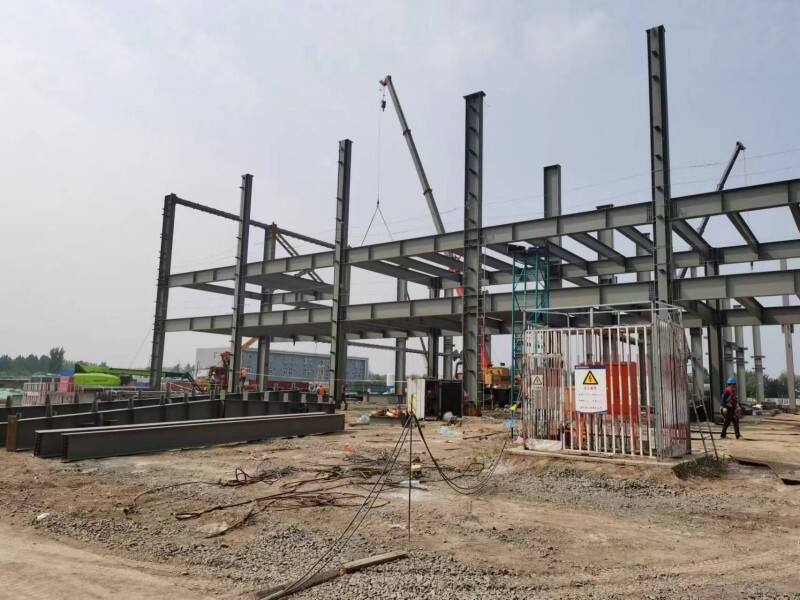
Thermal Expansion Effects on Steel Structure Integrity
Coefficient of Thermal Expansion: Quantifying Dimensional Change in Steel Structure
Structural steel has a thermal expansion coefficient around 12 times 10 to the negative sixth per degree Celsius. What does this mean practically? A 50 meter long beam will expand or contract about 12 millimeters if temperatures fluctuate by 50 degrees Celsius. While these changes are predictable and reversible under normal conditions, problems arise when structures cannot move freely. When movement gets restricted somewhere in the system, thermal stresses build up at connection points. This can lead to all sorts of issues including buckling beams, distorted joints, or even cracks forming over time from repeated stress cycles. Good design practice means factoring in these expansion calculations right from the start of any project. Engineers need to consider things like extreme weather conditions across seasons, how much sun exposure affects different parts of the structure, plus any heat generated during operation itself. Proper accommodation usually involves installing sliding supports, expansion joints, or other flexible connection methods that allow controlled movement without compromising structural integrity. Neglecting these considerations often results in serious long term damage, especially noticeable in big structures like expansive roof systems, bridge spans, and building facades where small movements can have significant impacts over decades of service life.
Expansion Joint Design Lessons from Moscow Metro Deep-Level Stations
The deep level metro stations in Moscow stand out as prime examples of how to handle thermal movements in underground structures made mostly of steel. These stations deal with temperature differences between the surface and tunnels that can reach over 30 degrees Celsius each year. To manage this, engineers designed special expansion joints with rubber bearings, moving parts, and stainless steel elements that resist rust. These joints allow the structure to expand, rotate, and shift slightly without putting pressure on neighboring sections of the framework. After many years of operation, it's clear these joints stop gradual warping of steel arches and support columns, even when temperatures fluctuate repeatedly. The techniques used here have become part of international standards like ISO 13822 and appear in Eurocode 3 Part 1-10, guiding construction practices for steel connections that face temperature changes over time.
High-Temperature Degradation of Steel Structure Strength and Stability
Steel structures experience progressive, irreversible degradation above 400°C —compromising yield strength, stiffness, and creep resistance. Unlike thermal expansion, which is largely reversible, high-temperature effects involve microstructural changes that permanently reduce load-carrying capacity and increase collapse risk during fires or process upsets.
Yield Strength Loss Between 400°C–600°C: ASTM A615 Data and Design Implications
According to ASTM A615 standards and backed up by research from NIST on fire resistance, reinforcing steel actually holds onto just around half of what it can normally handle when temperatures hit 600 degrees Celsius. The strength starts dropping off noticeably even before that, around 400 degrees. Because this loss isn't straightforward or linear, designers need to adjust their calculations. Instead of going purely by how strong materials are at normal room temps, they have to factor in temperature changes using specific reduction coefficients like the k theta value mentioned in EN 1993-1-2. For really important structures such as those supporting furnaces, bracing flare stacks, or framing refinery walkways, there are several approaches available. Engineers might choose passive methods like applying intumescent coatings or encasing steel in concrete. Active cooling systems work too. Some opt for better quality steel altogether, like ASTM A572 Grade 50, which manages slightly better performance up until about 500 degrees Celsius.
Creep-Rupture Failure Analysis: Gulf Oil Refinery Fire (2019)
The big fire at the Gulf Oil Refinery back in 2019 really exposed some problems with designs based solely on yield strength when materials are subjected to prolonged heat. Looking at what happened to those support columns, metallurgists found that grain boundaries started slipping around the 90 minute mark at temperatures hitting 550 degrees Celsius. After that came gradual thinning from oxidation and finally rupture at the bolted joints where there either wasn't any insulation or it had been damaged somehow. What makes this particularly interesting is how traditional static analysis methods completely missed predicting this chain reaction because they didn't account for strains building up over time. This real world disaster made it clear why creep modeling according to ASME BPVC Section II Part D matters so much. It also shows something counterintuitive but important: sometimes details like weld shapes, how tight bolts were initially set, and whether insulation remained intact throughout actually determine how well structures hold up at high temps far more than just the overall size of structural components.
Cryogenic Performance and Brittle Fracture Risk in Steel Structure
Toughness Retention Below -40°C: Charpy V-Notch Evidence per EN 10025-4
When temperatures drop below minus 40 degrees Celsius, most carbon steels experience what engineers call a ductile to brittle transition. This means they lose their ability to absorb energy before breaking and become prone to sudden cracks that spread quickly even when there's no movement or stress applied. The EN 10025-4 standard requires impact tests using Charpy V-notch specimens at actual operating temperatures to check if steel meets minimum energy absorption requirements like the 27 joules needed at minus 40 for S355NL grade steel. These tests help ensure materials won't suddenly fail from brittle fractures. Steel manufacturers achieve these performance levels through careful addition of elements like niobium and vanadium combined with special rolling techniques that improve grain structure and reduce the risk of cleavage fractures. Industries relying on these materials include liquefied natural gas storage facilities, pipelines in Arctic regions, cryogenic processing equipment, and rocket launch platforms where even small manufacturing defects could lead to complete system failures costing millions in repairs and downtime.
FAQs
What is the coefficient of thermal expansion for structural steel?
The thermal expansion coefficient for structural steel is approximately 12 times 10 to the negative sixth per degree Celsius, meaning a 50 meter long steel beam can expand or contract about 12 millimeters with a 50 degrees Celsius temperature change.
How do expansion joints work in steel structures?
Expansion joints in steel structures allow for controlled movement by incorporating elements like rubber bearings, moving parts, and rust-resistant stainless steel, thus preventing pressure buildup and preserving structural integrity.
What happens to steel structures when exposed to high temperatures?
Above 400°C, steel structures experience irreversible degradation of yield strength, stiffness, and creep resistance, reducing load-carrying capacity and increasing collapse risk.
How can steel structures withstand high temperatures?
Methods such as applying intumescent coatings, using better quality steel, encasing steel in concrete, or installing active cooling systems can help steel structures withstand high temperatures.
What is the ductile to brittle transition in steel?
Below minus 40 degrees Celsius, carbon steels undergo a ductile to brittle transition, losing the ability to absorb energy before breaking and becoming prone to sudden, rapid crack propagation.