 EN
EN

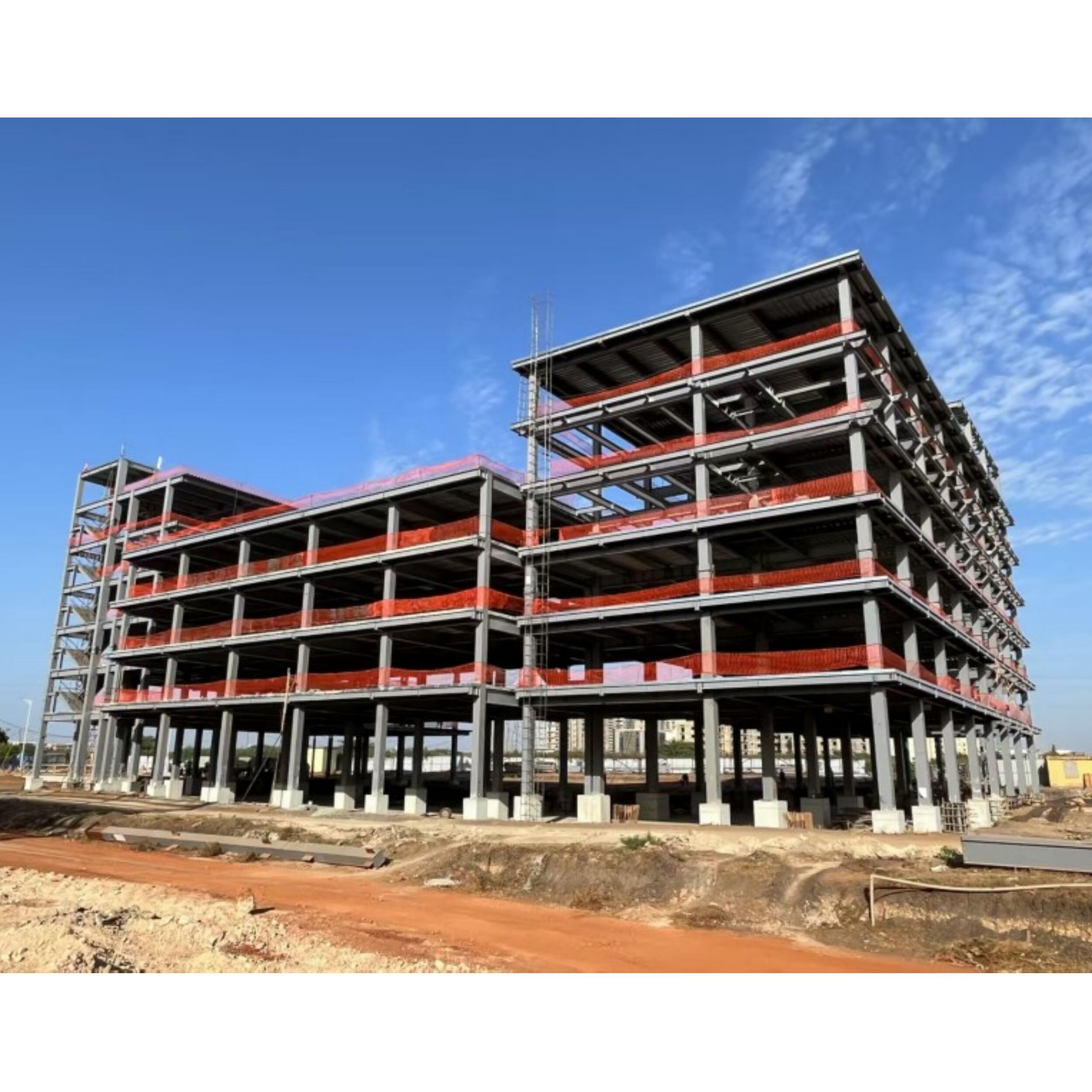
Why Steel Structures Excel in Seismic Resistance
The Role of Ductility and Energy Dissipation in Steel Frames
What makes steel so good for areas prone to earthquakes is basically its ductility, which means it can bend and stretch when stressed rather than just breaking apart. Brittle stuff like concrete tends to crack right away during tremors, but steel frames actually absorb earthquake energy by bending in a controlled way, which takes pressure off important parts of the structure. The real benefit here is that buildings made with steel can move side to side about 3% of how tall they are before anything bad happens, something most current construction rules take into account when designing safe structures for quake-prone regions.
Performance of Steel Structures in Recent High-Magnitude Earthquakes
During the 2023 Turkey-Syria earthquakes (M7.8), steel-framed industrial facilities sustained 72% less structural damage than concrete counterparts according to post-disaster assessments. These structures maintained functionality despite ground accelerations exceeding 0.8g, demonstrating steel’s capacity to endure extreme lateral forces.
Steel vs. Concrete: Material Behavior Under Seismic Stress
| Property | Steel | Concrete |
|---|---|---|
| Tensile Strength | 400-550 MPa | 2-5 MPa |
| Deformation Capacity | 20-30% strain before failure | <0.1% strain failure |
| Post-Yield Performance | Stable energy dissipation | Sudden brittle failure |
Trends in Performance-Based Seismic Design Favoring Steel
The latest building codes such as ASCE 7-22 are moving toward what's called performance-based seismic design, or PBSD for short. And this change actually works better for steel structures. When engineers work with steel, they get much clearer numbers on where it starts to bend and how far it can go before failing these details matter a lot when trying to hit that industry standard of just a 2% chance the building will collapse during a big earthquake over fifty years. Because steel behaves so predictably under stress, designers can create buildings that save money without sacrificing safety. We've seen this in practice too many times to count buildings come back online quickly after quakes because their steel frames held up exactly as predicted by those models.
Innovative Technologies Enhancing Seismic Performance in Steel Frames
Steel’s adaptability makes it ideal for integrating advanced seismic technologies. Its ductility and energy absorption capacity enable systems that outperform traditional designs. Below are four innovations redefining earthquake resilience in steel construction.
Buckling-Restrained Braces and Viscous Dampers: Mechanisms and Real-World Applications
Buckling restrained braces, or BRBs for short, work against global buckling issues because they keep those steel cores locked inside either steel or concrete casings. This setup helps maintain steady energy dissipation throughout the structure. Some research from 2022 looked at these special FeSMA BRBs made with iron based shape memory alloys and discovered something interesting - they cut down on inter story drift by around 40 percent when compared to regular braces. Then there are viscous dampers which actually team up well with BRBs. These devices take all that kinetic energy bouncing around during earthquakes and turn it into heat through those fluid filled cylinders. Engineers have seen them work really well in tall buildings located right next to active fault lines where stability matters most.
Self-Centering Systems for Minimal Residual Drift
Post-earthquake functionality depends on minimizing residual displacement. Self-centering steel frames use post-tensioned strands or rocking mechanisms to return buildings to their original position after shaking. Projects combining hybrid self-centering cores with viscous dampers have achieved residual drift below 0.2%, well under the 0.5% threshold for immediate occupancy per ASCE 7-22 standards.
Replaceable Structural Fuses and Damage-Avoidance Design
Engineers now design sacrificial components to protect primary structural elements. Replaceable shear links in eccentrically braced frames act as structural fuses, absorbing energy while being cost-effective to replace. A 2023 case study showed these systems reduced post-earthquake repair costs by 70% compared to standard steel frames.
Integration of Shape Memory Alloys (NiTi SMA) in Adaptive Steel Systems
Nickel-Titanium Shape Memory Alloys (NiTi SMA) exhibit superelasticity, allowing large deformations without permanent damage. When integrated into beam-column connections or bracing, SMA elements reduce peak story accelerations by up to 35%. Research from 2022 indicates SMA-enhanced steel frames retain 90% of their initial stiffness after major seismic events.
These innovations underscore steel’s unmatched potential for resilient infrastructure. By combining material science with performance-based design, engineers are advancing what is possible in high-seismic regions.
Engineering Evolution: From Force-Based to Performance-Based Design
Steel has become central to modern seismic design due to its compatibility with performance-based engineering. This evolution marks a shift from prescriptive force calculations to outcome-driven performance objectives.
Shift from traditional force-based to modern performance-based standards
Steel construction isn't what it used to be when it comes to figuring out how buildings will hold up during disasters. Back in the day, engineers just did simple calculations for base shear forces. Now they're diving deep into how steel actually behaves when pushed past its limits. Traditional approaches stuck with those straightforward linear analyses, but today's building codes demand something much more sophisticated. Modern software lets us simulate exactly how structures respond to real world stresses over time. A recent study from NEHRP in 2023 found that these new design methods can cut down on repair bills anywhere from 40 to almost two thirds compared with old school techniques. Makes sense really – knowing precisely where weaknesses might appear saves money in the long run.
Quantifying post-earthquake deformation and residual drift control
Current codes mandate strict residual drift limits (≤0.5%) per FEMA P-58 guidelines{nofollow} to ensure immediate occupancy. Engineers apply metric-driven frameworks incorporating:
- Energy dissipation capacity: Critical for steel moment frames
- Drift-sensitive components: Protected through iterative analysis
- Damage localization: Enabled by replaceable fuses
This precision helps avoid cascading failures seen in 30% of force-designed concrete buildings during the 2021 Haiti earthquake.
Case study: High-rise steel buildings with controlled seismic response
A 55-story steel tower in San Francisco (completed 2022) exemplifies performance-based design success. Its dual system integrates:
- Buckling-restrained braces (BRBs) for energy dissipation
- Viscous dampers reducing accelerations by 35%
- Post-tensioned self-centering beams
After simulated 6.7M shaking, residual drift remained under 0.3%, meeting immediate occupancy goals. Structural engineers estimate 60% faster reoccupancy versus comparable concrete towers in seismic zones.
Design Strategies to Minimize Post-Earthquake Downtime and Costs
Balancing Collapse Prevention With Functional Recovery Goals
Modern seismic design for steel structures pursues two goals: preventing collapse and maintaining post-event functionality. The 2023 NEHRP Guidelines emphasize "immediate occupancy" performance, requiring interstory drift limits of 0.5–1% during design-level shaking. Steel meets this through controlled yielding—its ductility enables energy dissipation while preserving vertical load capacity.
Modular and Replaceable Components for Rapid Post-Event Repair
The way steel is manufactured makes it possible to create intentional weak points in structures that contain damage when something goes wrong. Buildings can incorporate things like Buckling Restrained Braces (BRBs) or special moment frame connections that act like sacrificial components which get damaged first during earthquakes but can then be replaced quickly. This approach dramatically reduces downtime after disasters. Take the case of a high rise in Tokyo that had these bolted EBF connections installed following retrofitting work. When the massive 2011 Tohoku earthquake hit, this building was back online just 11 days later while neighboring concrete structures took around six months to fix up. The difference speaks volumes about smart engineering choices in seismic zones.
Lifecycle Cost Benefits Despite Higher Initial Investment
Although steel structures carry 15–20% higher upfront costs than concrete, FEMA P-58 analyses show 30–40% lower lifecycle costs over 50 years. Key advantages include:
- 78% reduction in repair costs through targeted component replacement
- 92% operational continuity rate in moderate seismic events
- 60% faster insurance recertification due to visible structural integrity
Post-tensioned steel frames have demonstrated damage-free performance at drift ratios up to 2.5%, achieving repair cost savings of $240/sf compared to traditional systems in UC Berkeley shake table tests (2022).
Frequently Asked Questions
Why is steel preferred over concrete in earthquake-prone areas?
Steel is preferred due to its ductility, which allows it to absorb and dissipate seismic energy effectively, minimizing damage.
What are Buckling Restrained Braces (BRBs)?
BRBs are components used in steel structures to prevent buckling and maintain energy dissipation during earthquakes.
How does modern performance-based design differ from traditional methods?
Modern design focuses on actual performance outcomes, utilizing advanced simulations to predict structural behavior under stress.