 EN
EN

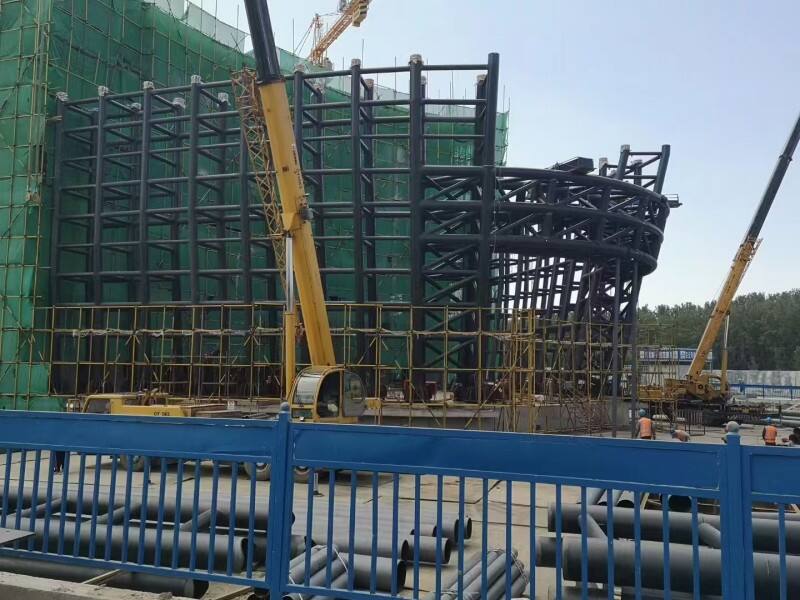
Why Steel Structure Excels in Disaster Resistance
High strength-to-weight ratio enabling rapid, predictable response under extreme loads
The strength-to-weight ratio of steel plays a big role in how well buildings withstand disasters. Steel frames can handle strong sideways forces like what happens during earthquakes without making foundations work harder than they should. When the ground shakes, lighter materials mean less force gets transferred through the building, yet everything still holds together. What makes steel so good at this? Its molecules are arranged pretty consistently throughout, which means engineers can predict how it will react when stressed. This reliability helps structures perform well whether facing tremors, high winds, or other dangers that threaten safety and stability in construction projects around the world.
Ductility and energy dissipation: how steel deforms safely during seismic events
The ductility of steel means it can deform in a controlled way during earthquakes without suddenly breaking apart, which gives it a major safety edge over brittle building materials. When subjected to shaking, steel structures go through what engineers call hysteresis cycles where they bend and then bounce back multiple times, turning dangerous earthquake energy into harmless heat instead of letting it destroy the building. Studies looking at actual earthquake damage show that buildings made with steel typically need about 60 percent less repair work after quakes than those built with concrete, based on research published in seismic engineering journals. Because steel can handle this kind of repeated bending without collapsing, many architects and engineers prefer it when designing buildings in areas prone to frequent or strong earthquakes.
Steel Structure Performance in Earthquake-Resistant Design
Moment-Resisting vs. Braced Frame Systems Under Combined Seismic Load Scenarios
Steel buildings help reduce earthquake damage mainly through two types of systems that resist sideways forces: moment resisting frames (MRFs) and concentrically braced frames (CBFs). With MRFs, the beams connect firmly to columns so they can bend in a controlled way when shaking happens. These work well for mid level buildings where architects need space flexibility since there are fewer visible supports. CBFs take a different approach by adding diagonal steel bars across the frame. This makes them really stiff against side to side movement, which is why many buildings in areas prone to strong quakes prefer this method. Some engineers combine both systems for extra protection during complex ground movements from multiple directions. The added redundancy gives building owners peace of mind knowing their structures can handle unexpected stresses better than single system designs.
| System Type | Energy Dissipation Mechanism | Best Applications | Drift Control Efficiency |
|---|---|---|---|
| Moment-Resisting | Plastic hinges at connections | Open-layout commercial spaces | Moderate (0.7–1.2% drift) |
| Braced Frame | Brace buckling/yielding | High-wind/quake zones | High (0.3–0.5% drift) |
MRFs offer 25% greater ductility but require rigorous connection detailing per AISC 341-22. CBFs reduce inter-story drift by up to 40%, though brace placement may constrain floor planning (FEMA P-2098, 2023).
Innovations: Self-Centering Connections and Steel Dampers for Reduced Residual Drift
Reducing residual drift matters a lot when buildings need to be occupied again after disasters strike. Steel connections designed to self-center work wonders here. These systems use either post-tensioned tendons or special shape-memory alloys to bring structures back into alignment once they've yielded under stress. Tests show these methods can cut down on leftover displacement by around 60 to 80 percent according to research published last year in the ASCE Journal of Structural Engineering. Alongside these innovations, various types of steel dampers help too. Buckling restrained braces (BRBs) and other shear-yielding devices absorb shock during earthquakes while maintaining structural integrity. Take the recent retrofit work done in Osaka as an example. Engineers there installed BRBs which kept building movement within safe limits during testing simulations. The results? Peak drift stayed at only 1.8% and residual displacement dropped to just 0.2%. That kind of performance makes a big difference for communities trying to recover from disasters without breaking their budgets.
Steel Structure Resilience Against High-Wind and Typhoon Events
Dynamic behavior of slender steel buildings under cyclonic winds: evidence from Japan and Gulf Coast case studies
Steel buildings tend to handle cyclones better because they can flex dynamically while absorbing energy predictably. When faced with really strong winds, these slender structures actually sway in a controlled manner instead of breaking apart suddenly. They convert all that force from the wind into vibrations that the building can manage safely. Evidence from places like Japan's typhoon zones and along America's Gulf Coast backs this up pretty well. Engineers there have seen time and again that when built right, steel frames stay intact even when winds hit over 150 miles per hour, which is about Category 4 hurricane territory. There are several reasons why steel stands up so well against such forces, starting with...
- Material flexibility, enabled by steel’s high strength-to-weight ratio, permits safe lateral movement without loss of stability
- Frame-level energy dissipation, where connections and members transform wind forces into damped oscillations
- Aerodynamic adaptability, with slender profiles and optimized cladding minimizing wind resistance and preventing progressive collapse
Decades of field evidence show >90% survival rates for code-compliant steel buildings in cyclonic zones—validating steel as the benchmark for wind-resilient infrastructure.
Addressing Fire Vulnerability in Steel Structure Systems
While steel excels in seismic and wind resilience, its mechanical properties degrade above 550°C (1022°F), where it can lose up to half its load-bearing capacity. Modern fire-resilient design mitigates this through integrated passive and active strategies:
- Passive fire protection (PFP), such as intumescent coatings, expands into insulating char layers when heated—slowing temperature rise in structural members
- Active systems, including early-detection smoke alarms and suppression sprinklers, limit flame spread during incipient stages
- Compartmentalization, using fire-rated walls, floors, and cavity barriers, contains fires and preserves structural continuity
Together, these measures extend the time to critical failure: protected steel beams routinely withstand standard fire exposure for 60–120 minutes, versus 15 minutes for unprotected sections. Though no structural material is fireproof, steel’s compatibility with robust, code-aligned fire engineering transforms a thermal vulnerability into a reliably managed risk.
FAQ
Why is steel preferred in earthquake-resistant building design?
Steel is preferred because of its high ductility and energy dissipation capabilities, allowing it to deform safely during earthquakes without collapsing. This property, combined with its predictable response under stress, makes steel structures resilient in seismic conditions.
How does steel contribute to wind and typhoon resilience?
Steel structures can flex dynamically, converting wind forces into manageable vibrations, allowing them to remain intact during high-wind events like typhoons and hurricanes. Its aerodynamic adaptability and flexibility contribute to minimal wind resistance and prevent collapse.
What measures are taken to protect steel structures from fire?
To protect steel structures from fire, architects apply passive fire protection such as intumescent coatings and implement active systems like smoke alarms and sprinklers. Compartmentalization further helps contain fires, ensuring steel structures remain intact longer during fire exposure.