 EN
EN

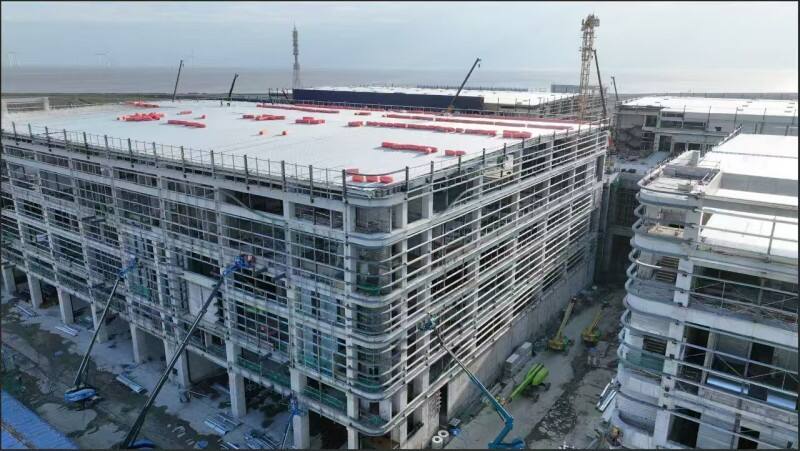
Why High-Strength Steel Is Critical for Modern Large-Span Steel Structure Projects
Performance Gains: Weight Reduction, Span Extension, and Material Efficiency
The introduction of high strength steel has revolutionized how we approach large span structures in steel construction, bringing about remarkable improvements in efficiency. Take S690+ for instance it cuts down structural weight anywhere between 25% to almost 40% when compared against traditional S355 steel. This makes a big difference in several ways foundations need less support, cranes aren't as heavy duty, and workers spend fewer hours putting things together on site. Architects love this because they can now design buildings with open spaces over 100 meters wide something that's becoming increasingly common in modern sports arenas and especially large exhibition centers. What really matters though is the material efficiency factor. For every single ton of S690+ used, we effectively replace around 1.5 tons worth of regular steel. That means less stuff needs to be transported and naturally leads to lower carbon footprints across the board. All these advantages come from the fact that S690+ has much higher yield strength at least 690 MPa according to specs. Structures built with this material carry heavier loads but require smaller cross sections, yet still maintain all necessary safety standards and performance characteristics throughout their lifespan.
Real-World Impact: Beijing Daxing Airport and Other Landmark Steel Structure Projects
Real world applications show how strong steel can actually work in practice. Take the Beijing Daxing International Airport for instance. They used S460 to S690 grade steel to create those impressive 80 meter cantilevers on the terminal roof, but they only needed about 60% of what would normally be required with regular steel grades. Something similar happened at Shanghai's National Exhibition and Convention Center too. The building has these massive 150 meter clear spans even when dealing with earthquake forces. The stronger steel helped reduce bending issues by around 34% compared to buildings made with standard S355 steel. Around the world, big steel structures are being built 30 to 50% quicker thanks to these lighter, pre-made components. Construction moves faster while still holding up against all sorts of weather conditions and other stresses that buildings face day after day.
Structural Behavior of High-Strength Steel in Large-Span Steel Structures
Buckling Resistance and Slenderness Limits Beyond S460
Using high strength steels like S460+ allows for thinner sections which are more efficient overall, though they come with some challenges regarding buckling control. When the steel gets stronger, the limits on how slender these sections can be become tighter because we need to avoid instability too early in the process. Take S690 columns for example they actually need about 15 percent lower slenderness ratios compared to what's acceptable for S460 materials. Studies show that S460 compression members generally work fine until around lambda equals 0.4, but S690 needs to stop at approximately 0.34 since it doesn't bend as much after yielding. The Eurocode 3 Annex D tackles this issue through adjusted column curves. What happens is the buckling resistance goes down somewhere between 8 and 12 percent even if everything else stays exactly the same geometry wise when moving from S460 to S700 steel grades. Because of all this, engineers should really focus on making sure the whole structure remains stable rather than just saving money on materials locally, particularly important when dealing with those long thin parts under direct loading conditions.
Yield-to-Tensile Ratio, Strain Hardening, and Residual Stress Effects on Global Stability
The S690+ steel has yield-to-tensile ratios above 0.90 which means there's less structural redundancy. This is important because big span structures need that extra protection against progressive collapse or when loads shift unexpectedly. When we look at high Y/T ratios, they actually stop strain hardening from happening properly. That limits how plastic hinges form and redistribute stress across connections during extreme events. Things get worse when considering thermal cutting and welding processes. These create residual stresses reaching around 60% of the material's yield strength in S690 sections. Compare that to just 30% normally seen in S355 steel and it becomes clear why problems develop faster. After repeated loading cycles, cracks start forming much quicker than expected. Engineers need to be aware of all these factors when designing structures made with S690+ materials. Some good practices to follow would be...
- Applying overstrength factors (γ = 1.1) for connections in seismic zones;
- Enforcing qualified weld procedures to control heat input and minimize HAZ softening;
- Conducting redundancy analyses that reflect reduced plastic rotation capacity (θ ≈ 0.025 rad for S690 vs. 0.03 rad for S355).
Design Code Considerations for High-Strength Steel in Steel Structure Applications
Modern steel structures increasingly leverage high-strength steel (HSS) to achieve unprecedented spans and efficiency. However, integrating grades beyond S690 demands careful navigation of international design codes, which take divergent approaches to structural stability validation.
Eurocode 3 Annex D vs. AISC 360-22: Column Curve Adjustments for S690+ Grades
The Eurocode 3 Annex D changes how we look at buckling curves for those high strength S460 to S700 steels. It basically increases the imperfection factors because these materials don't stretch as much and their strain hardening behavior varies when compressed axially. On the other side of the pond, the AISC 360-22 Clause E3 keeps things simpler with its single buckling formula but adds tighter restrictions on slenderness ratios and reduces compressive strength factors for S690+ members. Why? Because they want to make sure everything stays stable from an empirical standpoint. These differences matter in real projects. Eurocode works better for multi-story buildings where boundaries are clearly defined, whereas AISC methods tend to give engineers more confidence when dealing with seismic zones or structures that carry loads unevenly. Smart structural teams figure out which approach makes sense for their project right from the start, often running finite element models and building prototypes of connections before getting too deep into design work to prevent costly redesigns later on.
Strategic Grade Selection and Application Mapping in Large-Span Steel Structures
Functional Matching: S460–S890 Use Cases for Trusses, Roof Girders, Compression Members, and Connections
Getting good performance out of big steel structures really depends on picking the right steel grades for what each part needs to do. Take trusses and roof girders for example. These components are all about managing weight versus stiffness and how much they bend under load. That's why engineers turn to S690 through S890 steels most of the time. With their super strong yield strength (at least 690 MPa), these materials let designers build spans over 120 meters long while using around 15 to 20 percent less material compared to standard S355 steel, without compromising on how well the structure performs during normal operation. When it comes to parts that mainly take compression forces like columns and connection points, the industry tends to go for S460 to S550 grades instead. These offer enough strength but also stretch better when needed (about 14% elongation compared to just 10% for those super strong S890 steels) and work better with welding processes. The lower carbon content makes fabrication easier too, which matters a lot when dealing with stress points in bolted or welded joints. Sometimes engineers mix things up at critical junctions where forces change direction suddenly. A common trick is pairing S690 flanges with regular S355 webs in certain beam sections. This combination helps get the best of both worlds regarding how loads move through the structure and how practical it is to actually build the thing on site. Making sure every component works within its best possible range for strength, cost, and ease of construction remains key throughout the design process.
FAQ
Why is high-strength steel important in modern steel structures?
High-strength steel like S690+ reduces structural weight significantly, extends spans, and increases material efficiency, allowing for the design of larger and more open spaces while reducing the carbon footprint.
How does high-strength steel impact construction speed?
By allowing for lighter, pre-made components, structures using high-strength steel can be built 30% to 50% faster, reducing construction time while maintaining strength and resilience against environmental stresses.
What are the challenges of using high-strength steel like S690+ in construction?
Challenges include managing buckling resistance due to thinner sections, the need for tighter slenderness ratios, and additional considerations for residual stresses and yield-to-tensile ratios during design and fabrication.
What are the design code considerations for high-strength steel?
The design codes for high-strength steel differ internationally, with the Eurocode 3 Annex D and AISC 360-22 providing varying guidelines on buckling curves, slenderness ratios, and compressive strength factors for grades like S690+.
How do engineers select the appropriate steel grades for large-span structures?
Selection depends on the specific components’ requirements; for instance, S690–S890 grades are often used for trusses and roof girders, while S460–S550 grades are preferred for compression members and connection points.
Table of Contents
- Why High-Strength Steel Is Critical for Modern Large-Span Steel Structure Projects
- Structural Behavior of High-Strength Steel in Large-Span Steel Structures
- Design Code Considerations for High-Strength Steel in Steel Structure Applications
- Strategic Grade Selection and Application Mapping in Large-Span Steel Structures
-
FAQ
- Why is high-strength steel important in modern steel structures?
- How does high-strength steel impact construction speed?
- What are the challenges of using high-strength steel like S690+ in construction?
- What are the design code considerations for high-strength steel?
- How do engineers select the appropriate steel grades for large-span structures?