 EN
EN

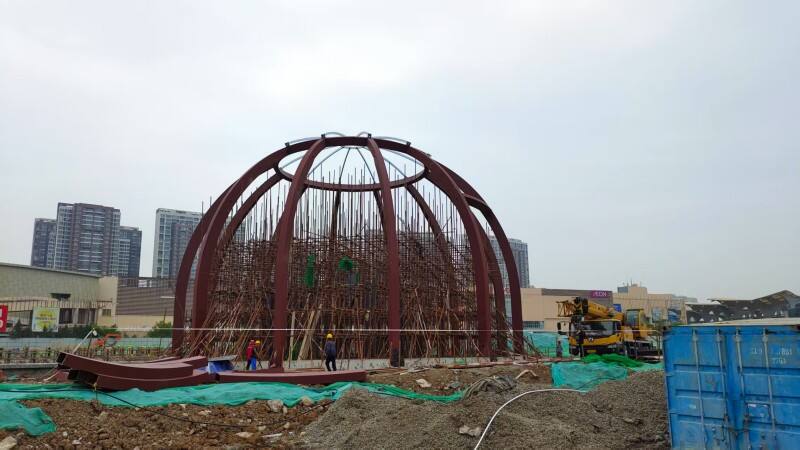
Foundations: From Industrial Ironwork to Modern Steel Structure Fabrication
Bessemer and Open-Hearth Furnaces: Enabling Mass-Produced Structural Steel
Steel production really took off in the middle of the 1800s thanks to Henry Bessemer's converter patent back in 1856, followed shortly after by the Siemens-Martin open-hearth furnace. What these inventions did was cut down on production time dramatically, going from taking weeks to just a few hours. Plus they allowed much better control over carbon content which made all the difference for how strong and reliable the final product would be. By around 1870, most of the steel produced in America came from Bessemer plants, and prices dropped something like 80% compared to before. This meant architects could finally start thinking bigger. Take Chicago's Home Insurance Building built in 1885 as proof. Steel proved itself far superior to old fashioned cast iron when it came to holding up under pressure and resisting fires too. Soon enough standardized I-beams were everywhere, forming the backbone of modern steel structures. Cities began growing vertically because suddenly building tall wasn't just technically feasible anymore, it actually made financial sense for developers looking to maximize space in crowded urban areas.
Rise of Welding, Standardization, and Early Prefabrication (1920–1960)
Three interlocking advances between 1920 and 1960 redefined fabrication efficiency and set enduring industry norms:
- Arc welding replaced riveting, cutting joint weight by 15–20% and accelerating assembly. Its viability under extreme pressure was proven during WWII with the mass production of welded Liberty ships.
- Standardized steel grades gained formal recognition with ASTM A36 in 1960—a unified specification for yield strength, elongation, and chemical composition that reduced design approval cycles by 30%.
- Prefabrication matured as a strategic practice: American Bridge Company pre-assembled trusses for the Golden Gate Bridge (1937), cutting onsite labor by 40% compared to traditional field-erected methods.
| Innovation | Impact on Fabrication Efficiency | Key Milestone |
|---|---|---|
| Shielded Metal Arc Welding | 25% faster assembly vs. riveting | AWS standardization (1940s) |
| Unified Steel Grades | 30% reduction in design revisions | ASTM A36 adoption (1960) |
| Component Preassembly | 40% less onsite labor | Major bridge projects (1930s–50s) |
These developments codified the principles of modularity, repeatability, and offsite precision—cornerstones of today’s steel structure fabrication workflows.
Precision Manufacturing: Advanced Cutting, Forming, and Welding for Steel Structure Fabrication
Laser, Plasma, and Waterjet Cutting: Achieving Sub-Millimeter Tolerances in Steel Structure Components
Steel structure fabrication today depends on three main cutting technologies that work together depending on what needs to be cut. When dealing with materials of different thicknesses, how complicated the shape is, and whether something might react badly to heat, fabricators choose between these options. Laser cutting gives really precise results down to fractions of a millimeter on thinner plates under about 25mm thick. This makes it great for those detailed connection pieces and bracing components where we want to avoid too much heat damage. For thicker sections going all the way up to around 150mm, plasma cutting gets the job done fast while still keeping things dimensionally accurate enough for structural beams and columns. Waterjet cutting works differently since it uses super pressurized water mixed with grit to slice through metal. What makes this method special is that it creates complex shapes without warping from heat, which is why architects love it for fancy designs and situations where corrosion could be a problem. Putting all these methods together cuts down on wasted material somewhere between 15% and 20%, saves time on extra finishing work, and means parts show up at the site already ready to go into place.
Robotic Arc Welding and Adaptive Machining: Consistency and Scalability in Steel Structure Production
Robotic arc welding sets a new standard for both quality and productivity in structural steel work these days. Modern MIG and TIG systems can hit weld positions within about 0.1mm accuracy again and again, maintaining the same penetration depth throughout even when dealing with thousands of similar joints. When combined with adaptive machining techniques that actually measure how much the metal warps after welding and then tweak the cutting path accordingly, this whole system cuts down on dimensional issues by around 40 percent. These machines come equipped with built-in sensors that keep an eye on everything from electrical output to how fast the torch moves along the joint, catching problems such as tiny air pockets or weak spots before they get worse. What all this adds up to is continuous round-the-clock production capable of meeting strict standards like AISC 360 and AWS D1.1 while still keeping structural integrity intact. Projects that once took months now often finish 30% faster thanks to these advancements.
Digital Integration: BIM, Parametric Modeling, and AI in Steel Structure Fabrication Workflows
End-to-End BIM Coordination: From Design Intent to Shop Drawing Automation for Steel Structures
Building Information Modeling or BIM acts like the backbone of today's steel structure projects bringing together all sorts of information from architecture, structural engineering, MEP systems, and fabrication into one smart digital model. With BIM, teams can spot conflicts between different parts of the project automatically before they become real problems. The software also creates detailed shop drawings that match up with mill certifications and proper erection sequences, plus it calculates exactly how much material is needed right down to counting bolts and measuring welds. When companies run virtual simulations of construction processes, they catch potential build issues way earlier than traditional methods allow, which cuts down on expensive fixes at the job site by around 15% according to industry reports from 2024. What makes BIM really valuable though is how it connects what designers imagine with what machines actually need to execute those plans. Parametric libraries inside the software generate connection details automatically, and when using CNC machines based directly off the model, there are far fewer mistakes during translation from blueprint to metal. This whole process typically saves about 30% time between initial design and final fabrication stages.
AI-Powered Nesting, Yield Optimization, and Real-Time Defect Prediction in Steel Structure Fabrication
AI is changing how we handle those really wasteful and risky parts of fabrication work, specifically when it comes to using materials efficiently and checking weld quality. Smart systems look at past projects' nesting data, what plates are available in stock, and all the cutting limitations to get the most out of each sheet. This approach typically increases usable material by around 15% give or take, which means less waste going to landfills. At the same time, cameras built into robotic welding stations can check every single weld down to about half a millimeter detail. These systems spot tiny problems humans would miss completely, like little air pockets in the metal or areas where the weld didn't fully fuse together. Some shops also use thermal imaging along with sensors that measure stress points throughout the welding process. The data from these tools helps predict when things might start warping, so technicians can adjust clamps in sequence or cool specific spots before major issues happen. Overall, this kind of smart manufacturing stops expensive fixes later on, keeps everything up to standard according to AWS D1.1 rules for weld acceptance, and gives engineers peace of mind knowing structures will hold up over time.
FAQ
What is the significance of the Bessemer process in steel production?
The Bessemer process, patented in 1856, significantly reduced steel production time from weeks to a few hours and improved carbon content control, enhancing the quality and reliability of steel. This allowed for larger-scale projects like skyscrapers.
How did WWII influence welding techniques in steel fabrication?
During WWII, the mass production of welded Liberty ships demonstrated the viability of arc welding under extreme conditions, leading to its widespread adoption in steel fabrication for its efficiency and strength.
How does Building Information Modeling (BIM) improve steel structure projects?
BIM integrates various project aspects into a smart digital model, allowing teams to preemptively identify conflicts, automate shop drawings, and streamline material estimation, which reduces costly errors and saves time.