 EN
EN

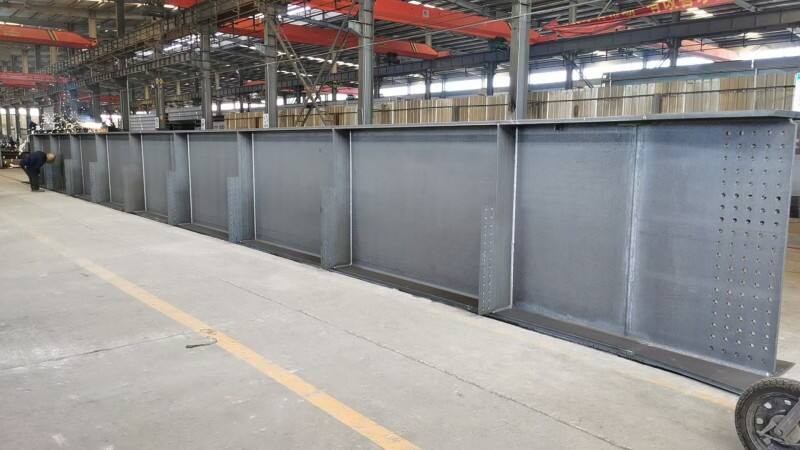
Seismic Design Principles and Code Compliance for Steel Structures
Capacity design philosophy and performance-based objectives in modern steel seismic codes
Today's building codes for steel structures follow what's called capacity design philosophy. Basically, this means we want buildings to fail in ways that protect people's lives first. The idea is to direct damage away from those really important load bearing parts of the building. These codes work around specific performance goals. Structures need to handle different earthquake situations ranging from being able to just keep operating after small tremors all the way up to making sure they don't fall down completely during those big rare quakes. What happens is engineers create a sort of strength ranking system. Things like braces, beam ends, and those panel areas between beams get designed to bend and absorb energy before the main structural components like columns actually break. SAC Phase II studies showed something interesting about beam column connections when built right they can rotate about 0.04 radians without cracking. Real world tests after earthquakes confirmed this too, with buildings following these rules having about 40 percent fewer problems at connection points. And financially speaking, buildings constructed with these principles end up costing about a third less to fix over time compared to older methods. So while it might seem like just another engineering detail, proper ductility really makes a difference in both keeping people safe and saving money in the long run.
Key requirements from AISC 341, Eurocode 8, and GB 50011 for ductile steel framing systems
Seismic building codes around the world set strict but different rules to make sure steel structures can bend without breaking during earthquakes. The American Institute of Steel Construction's AISC 341 has specific demands for special moment frames, limiting how much floors can shift relative to each other to about 2.5%. It also insists that certain connections must pass tests where they're loaded back and forth repeatedly. Across Europe, Eurocode 8 focuses on material strength, asking for at least 27 joules of energy absorption from steel samples tested at minus 20 degrees Celsius using those CVN tests everyone talks about. Meanwhile in China, their GB 50011 code takes another approach by controlling when beams might buckle locally, setting maximum limits on how wide versus thick beams should be based on formula involving square roots and yield strengths. All these various standards share some basic ideas though:
- Connection ductility: Prequalified moment connections must demonstrate 0.04 rad rotation capacity (GB 50011), with AISC 341 and Eurocode 8 specifying 0.03 rad and 0.025 rad respectively
- Strength hierarchy: Column-to-beam nominal strength ratios must exceed 1.2 to ensure plastic hinges form preferentially in beams
- Quality assurance: Full-penetration groove welds in critical zones require mandatory ultrasonic testing
| Requirement | AISC 341 | Eurocode 8 | GB 50011 |
|---|---|---|---|
| Rotation capacity | 0.03 rad | 0.025 rad | 0.04 rad |
| Material toughness | CVN ≥20J @ 21°F | CVN ≥27J @ −4°F | CVN ≥40J @ −4°F |
| Max beam slenderness ratio | 0.30√(Fy) | 0.45√(Fy) | 0.25√(Fy) |
This convergence reflects hard-won lessons—especially the 1994 Northridge earthquake, where widespread connection fractures exposed the consequences of inadequate ductility. Harmonized provisions enable consistent safety benchmarks across multinational projects while allowing calibration to regional hazard levels.
Advanced Seismic Analysis Methods for Steel Structures
Response spectrum analysis: Applicability, limitations, and interpretation for regular vs. irregular steel frames
RSA continues to be one of those go-to methods engineers use to figure out what kind of shaking forces steel buildings might face during earthquakes, especially when dealing with straightforward frame designs where weight and rigidity are evenly spread throughout the structure. What makes this approach work so well is something called modal superposition, which usually gets around 90% of all movement patterns covered with just three to five different vibration modes. But there's a catch worth mentioning here. When structures get complicated – think buildings that twist unexpectedly, have sudden drops in height between floors, or sections that are notably softer than others – RSA starts falling short. These tricky situations involve complex interactions between different parts of the building that RSA simply can't account for properly. That's why experienced structural analysts always bring in directional combination techniques like SRSS or CQC when working on these problematic designs. And they know better than to trust the numbers blindly because sometimes RSA will miss important details about how much stress really builds up at key joints. Some recent testing showed errors going over 25% compared to actual measurements from real world tests (Journal of Constructional Steel Research, 2022). So whenever a design crosses certain irregularity boundaries, most professionals reach for nonlinear analysis tools as backup just to be safe.
Time-history analysis validation: Lessons from Christchurch’s 12-story moment-resisting steel building
The nonlinear time history analysis, or THA as it's commonly called, played a major role in figuring out how Christchurch's 12 story steel building actually performed during that big earthquake back in 2011. Engineers fed real ground motion data into their models and were able to recreate what really happened on site pretty well. They saw around 10% drift between stories where the structure had weakened, noticed some beams and columns started to yield partially, and observed how those base plates on the columns deformed under stress. When comparing these computer models with what actually occurred in the real world, some interesting things stood out that changed our understanding of structural behavior during earthquakes.
- Connection fracture models required refinement to capture low-cycle fatigue degradation
- Soil-structure interaction significantly altered internal force redistribution
- P-delta effects were essential to predict residual drifts—omitting them underestimated displacements by 40%
These findings confirm THA’s unmatched value in performance-based design, particularly for complex or high-consequence structures. When paired with accurate steel material modeling—including Bauschinger effects, isotropic/kinematic hardening, and strain-rate sensitivity—THA moves beyond code-prescriptive checks to quantify true seismic resilience.
Ductility, Energy Dissipation, and Material Behavior in Steel Structures
Hysteretic energy absorption quantified: SAC Phase II insights on W-shape beam-column connections
The SAC Phase II project gave us real-world data on how steel moment frames absorb energy during earthquakes. Tests showed that W-shaped beam-column connections could soak up around 740 kilojoules each when subjected to repeated loads. The beam flanges bent quite a bit too, rotating past 0.06 radians while still holding onto about 80% of their original strength. What's interesting is that the panel zones actually accounted for roughly 35 to 40 percent of all energy being dissipated in the frame. Far from being a structural flaw, these areas were intentionally designed to deform in a controlled way. This understanding completely changed building codes regarding how much rotation connections need to handle and what kind of reinforcement should go into panel zones. The takeaway? When it comes to making steel buildings earthquake resistant, it's not about keeping everything perfectly stiff all the time. Instead, allowing certain parts to yield in predictable ways turns out to be fundamental for seismic safety.
The ductility–strength trade-off: How over-designed connections compromise system-level seismic resilience
Making connections too strong messes with the balance of forces that capacity design relies on. If connections stay elastic when there's shaking from earthquakes, those plastic hinges tend to form in unexpected places like columns, floors, or even foundations which aren't usually built to handle such stresses. And this kind of misplaced strength actually makes things worse because it raises the chance of sudden, dangerous failures. Research indicates that when connection strength goes beyond 1.5 times what's needed, column damage jumps about 40%. The whole point of capacity design is to make sure connections give way first before the main structural parts do. This allows energy to spread out through the building in a controlled way rather than concentrating in one spot. Good detailing isn't about cutting corners on safety at all. Instead, it creates structures that act more like living systems, able to absorb major shocks while still keeping their basic load carrying ability intact.
High-Performance Ductile Connection Systems for Steel Structures
In modern earthquake-resistant construction, engineers depend heavily on special ductile connections that stop sudden failures and help manage energy during shaking events in steel buildings. We're talking about things like RBS connections where the beam gets thinner at certain points, BRB systems that resist buckling even when compressed, and those critical bolted joints that actually allow some movement before breaking. These components are designed to bend and twist predictably under stress, handling big deformations over and over again without snapping completely. The whole point of performance-based engineering is to get these connection points to hold their strength and rigidity through multiple quake cycles, which definitely cuts down on the chances of total building collapse something we've seen time and time again after major earthquakes around the globe. Research from SAC Phase II shows pretty clearly that when moment frames have these improved ductile connections, they can soak up over 15% more energy during shaking compared to old fashioned rigid joints. Building codes now require strict testing for how much these connections can rotate before failing, typically looking for at least 0.03 radians of movement capacity. When done right, these connections turn ordinary steel structures into something smarter: they absorb seismic shocks by letting specific parts deform on purpose while keeping the main structural system intact enough to support people and equipment safely.
FAQ
What is capacity design philosophy in seismic codes?
Capacity design philosophy ensures that buildings fail in ways that prioritize life safety by directing damage away from critical load-bearing components.
How do AISC 341, Eurocode 8, and GB 50011 standardize steel structure requirements?
These codes have specific criteria for ductility, strength hierarchy, and quality assurance, ensuring steel buildings are earthquake-resistant with similar safety benchmarks globally.
When should engineers use nonlinear analysis over response spectrum analysis?
Engineers should opt for nonlinear analysis when dealing with irregular structures where RSA fails to account for complex interactions and stress distributions.
What role does ductility play in steel structures during earthquakes?
Ductility allows certain parts of a steel building to yield predictably under stress, dissipating energy and enhancing seismic safety.
Why are special ductile connections important in modern steel structures?
These connections absorb seismic energy, preventing sudden failures and maintaining building integrity during earthquakes.